
News
How Long Does It Take to Get a Black Belt in BJJ? The Definitive Guide

If you are starting your BJJ journey or are grinding through the early stages of the belt system, you naturally want to know, "How long does it take to get a black belt?" The truth is, however, that there is no single answer; the timeline varies greatly.
Advancing to the black belt rank in BJJ, for those still asking what is BJJ and how its belt system works, is a personal journey that requires dedication to help you progress faster. Several factors, including your training frequency and time commitment, also affect it.
This blog post will show you the realistic time frame for achieving a black belt in BJJ. It'll cover the average time it takes most students and explain the factors that control your progress.
The Typical BJJ Belt Timeline (Belt-by-Belt)
The Brazilian Jiu-Jitsu belt system for adults features five main belt ranks before the coral and red belts. Achieving the black belt is truly a marathon, not a sprint.
Here is the typical range of years of training for the colored belts:
White Belt to Blue Belt (1–3 Years)
This is the foundational phase, and your immediate focus should be on survival. During this time, you learn fundamental techniques and build essential mat endurance. Promotions in the early stages can be surprisingly fast, especially for people with relevant previous experience. For the average beginner, it takes one school year or more of consistent training.
During this phase, many new students prefer breathable men’s kimonos or women’s kimonos for comfortable and durable long training sessions.
Blue Belt to Purple Belt (2–3 Years)
The blue belt is often called the "plateau phase." At this stage, wearing flexible BJJ shorts and reliable men’s no-gi apparel can help you train comfortably during intense drilling sessions. This is where you start to develop your own offensive game, moving beyond mere defense. To advance, you must learn many techniques and put in serious training time.
Purple Belt to Brown Belt (1.5–3 Years)
At purple belt, you are officially an advanced student, meaning your skills become specialized. Here, you gain a deep understanding of concepts and begin helping the instructor teach lower belt ranks.
Brown Belt to Black Belt (1–4 Years)
The brown belt is the final stage before the black belt. You focus on refining your skills and strategy, polishing your game until it is perfect.
Red Belt
The prestigious red belt is reserved only for masters who have completed the full adult journey and many decades of teaching the art.
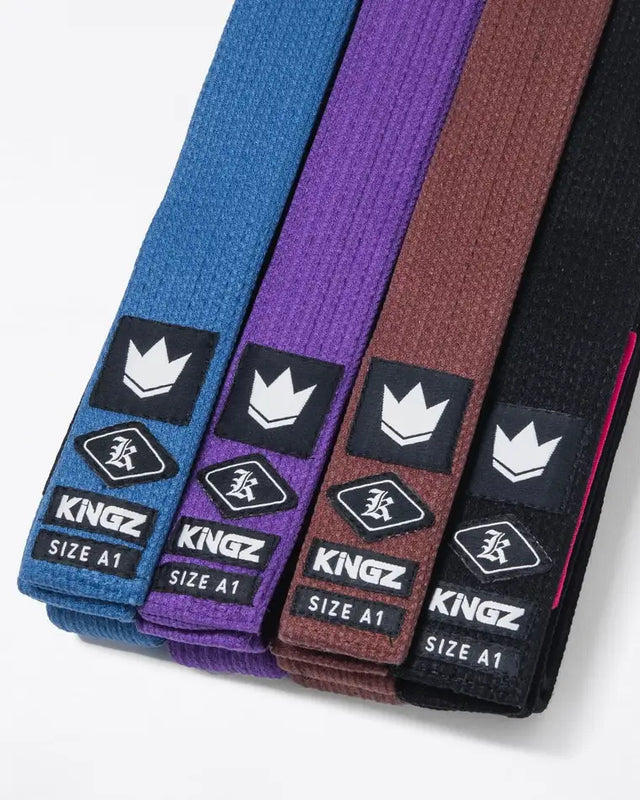
The Average Time to Achieve Black Belt in Brazilian Jiu-Jitsu
Generally, the full-time frame for earning a black belt is usually between six to 13 years of training. There are three paces you might progress:
-
Fast Progression (5-8 years): A highly dedicated student who progresses quickly is usually training multiple times (four to six times a week). They likely have a strong athletic background and compete consistently. They may achieve the black belt in BJJ in five to eight years of training.
-
Average Progression (10–12 years): This is the most common path, typically involving a student who trains two to four times a week. They might occasionally take breaks due to life events while steadily building their knowledge. Here, they might earn their black belt in ten years.
- Slow Progression (13+ years): This describes the dedicated hobbyist who trains only once or twice a times a week, prioritizes safety, and takes long breaks. While they still achieve the black belt, their journey is understandably extended.
BJJ Belt Progression for Children
The path for children in Brazilian Jiu-Jitsu (BJJ) follows a separate belt system designed to keep training motivational and developmentally appropriate. Unlike the adult system, children cannot earn a blue belt or higher until they meet the minimum age requirements set by organizations such as the International Brazilian Jiu-Jitsu Federation (IBJJF).
This ensures the integrity of the martial arts rankings. Parents can explore durable kids’ BJJ uniforms that support proper fit and flexibility for younger practitioners.
The purpose of the children's belt progression is to encourage consistent training, learning of fundamental techniques, and gradual personal growth. They must learn discipline and respect, qualities essential for every martial artist.
-
White Belt: The starting belt for all young practitioners of Jiu-Jitsu.
-
Gray, Yellow, Orange, and Green Belts: These colored belts are awarded in sequence. Each belt may have various stripes or tips to indicate smaller progress milestones. The student must demonstrate skills, dedication, and a certain number of years of training to advance through these belt ranks.
- Green Belt: This is the highest rank a child or juvenile (under 16) can achieve in the youth program. They cannot get a black belt until they are 19 years old.
After a juvenile reaches the green belt, they transition to the adult ranks, starting with the white belt again at age 16. However, they typically progress more quickly to blue belt because of their previous experience.
Factors that Affect How Long It Takes to Get A Black Belt
The typical path takes ten years or more, but several factors can significantly speed up or slow down your belt progression to the black belt in BJJ. In many gyms, class attendance is required for promotion. It is considered alongside skill proficiency, moral values, and attention to fundamentals, such as knowing how to tie a BJJ belt properly before training. The difference between an 8-year BJJ journey and a 15-year one depends on these:
-
Training Consistency and Frequency: This is the most important factor. A person who trains multiple times (four to six times a week) will progress faster than someone who trains only twice a week.
-
Athletic Background: Previous experience in grappling martial arts like wrestling or judo can help you progress quickly on your BJJ belt journey. When you already have basic wrestling experience, you can skip certain early stages of the white belt and thus progress faster. However, physical attributes and natural ability also play a smaller role.
-
Quality of Instruction and Coaching: Train under experienced coaches who provide a clear, structured curriculum. A good instructor gives the necessary knowledge and structure to build a deep understanding of Jiu-Jitsu.
-
Competition Goals: Competition experience speeds things up greatly because tournament pressure forces you to refine your technique and quickly exposes holes in your game.
-
Consistency and Attitude: Consistent training is important, even more important than raw intensity. Avoid long, unplanned layoffs. A positive attitude and a willingness to learn from your training partners will also quicken your progress.
-
Gym Culture and Promotion Standards: Some gym cultures strictly follow IBJJF minimums, while others prioritize competition success. These requirements usually lead to slower, more conservative promotions, so be sure to choose the right gym.
- Injuries, Life Events, and Burnout: Real-world events happen often, and injuries or lack of consistent training due to burnout can easily add a few years to your BJJ journey.
Keep this in mind: Travis Stevens and Kit Dale are exceptions. Travis Stevens earned his black belt in about 18 months, leveraging his background as an Olympic Judo player. Their stories show how natural ability and intense training can shorten the timeline. But for most people, the traditional route through blue belt, purple belt, and brown belt is the standard.
Official Rules and Minimums to Be Aware Of (IBJJF)
While your instructor ultimately decides your readiness for the next rank by observing your skills and knowledge, international bodies like the IBJJF give minimum guidelines for belt progression, preserving the traditions of the art, including the history of the BJJ gi.
IBJJF Minimums for Adult Colored Belts
The IBJJF rules set minimum time requirements that you must meet to compete and be promoted in their system, and adhering to these IBJJF minimums helps keep the black belt rank high in integrity.
-
Blue Belt Minimum Time: You need a minimum of two years of training in rank before you are eligible for the purple belt.
-
Purple Belt Minimum Time: You need a minimum of one and a half years of training in rank before you are eligible for brown belt.
- Brown Belt Minimum Time: You need a minimum of one year of training in the rank before you are eligible for the black belt.
If you get a black belt at the earliest possible pace following these rules, which assumes you achieve blue belt after one year of training, the shortest possible time is five and a half years. However, this fast pace requires elite-level consistency and skill; for most students, the average time is much longer.
Black Belt Certification and the Red Belt
Once you achieve a black belt, you must register and pay a fee to the IBJJF, which certifies you to compete at the black belt rank. The IBJJF also allows you to promote your own students. It is a formal recognition of the skills and deep understanding required. The journey continues beyond the black belt, with the red belt and subsequent ranks awarded based on years of training and dedication to the art.
Ways That Might Accelerate Your Black Belt Journey
To earn a black belt, you need a structured approach. You must focus on consistent training and prioritize deliberate practice. These strategies can help you progress faster without relying on a fixed timeline.
-
Prioritize Foundational Skills: You need consistent training (three times a week minimum), focusing on safety, escapes, and position retention, to master fundamental techniques. To get your blue belt, you must demonstrate this proficiency because it leads to the next belt progression.
-
Develop Your Offensive Game: Develop your core sweeps or submissions and practice them from your worst positions. Test your skills against other training partners by adding structured rolling (open mats) to increase mat time, and consider low-stakes competition early on.
-
Refine and Seek Specialization: Start targeted practice. Refine your two best positions and take private lessons to address the weak spots in your technique. Spar regularly with brown and black belt training partners to show that you’re ready for the next level, which is the purple belt.
-
Cultivate a Teaching Mindset: When you have a deep understanding of core principles, assist your instructor with white belt and blue belt drills. Help teach the art to solidify your own knowledge, all while maintaining consistent training (four+ times a week).
-
Use Supplemental Training: Supplemental training, such as strength and conditioning, can greatly improve your overall athleticism. This will help your BJJ performance, since a strong body is a durable body, allowing for more training time.
-
Learn From Multiple Sources: Don't limit your learning to the gym floor. Learn from multiple sources, such as books and videos, to improve your deep understanding of BJJ principles and concepts.
-
Seek Varied Training Partners: Training with partners of different skill levels helps develop different aspects of your game. Training with newer students forces you to be precise, while training with high-level students forces you to defend.
-
Actively Solicit Feedback: Always ask for advice. Seeking feedback from training partners can provide valuable insights and reveal your blind spots, which will accelerate your progress.
Avoid shortcuts, prioritize deliberate practice, and do not chase the belt, as that could lead to burnout. Prioritizing personal growth and skill acquisition is the best way to earn the black belt.
Frequently Asked Questions
Is There a Separate Category for Children's Black Belt?
The highest rank for children or juveniles is the green belt; the black belt can only be awarded when the student is 19, after years of training, and meets all IBJJF minimums.
Can I Get a BJJ Black Belt in 3 Years?
This is extremely rare. It requires full-time, elite training multiple times daily, six days a week, and usually significant prior experience in wrestling or judo. Think of examples like BJ Penn or Travis Stevens.
How Old Is Too Old to Get a Black Belt in BJJ?
There is no age limit for earning a black belt in BJJ, as many people start in their 40s and earn it in their 50s. While progress might be slower due to recovery time, the journey is achievable at any age.
Do Competitions Make You Get Promoted Faster?
Yes, competition experience can speed up promotions. This is because if you perform well, it shows your instructor that you can apply technique and skills under real pressure.
Is There an Average Age to Get a BJJ Black Belt?
People who start in their early twenties usually achieve promotion in their early to mid-30s. But the average time varies greatly depending on when the practitioner begins training.
How Can You Train to Reach Black Belt Faster?
To truly progress faster and reach black belt, aim high: target at least six to ten hours of mat time per week. Spread this over three to five sessions a week, to maximize learning and allow recovery time.
Conclusion
So, how long does it take to get a black belt? The average time to earn a black belt in Brazilian Jiu-Jitsu is about eight to 12 years of dedicated training. Getting a black belt is an achievement that makes Brazilian Jiu-Jitsu unique among martial arts. This long time frame means earning the black belt in BJJ deserves great respect.
The secret to staying on track is consistent training. You must show up, even during the difficult years of training spent at blue, purple, and brown belt ranks. At Kingz, we build our GIs and training apparel to remove every obstacle and keep you on the mat. Our gear is as reliable as the commitment it takes to achieve your goals, making us your partner on the entire road from white belt to black belt.