

News
How Long Are BJJ Classes and What Happens Inside Them?

Walking into a jiu-jitsu gym for the first time feels formal. Maybe a little intimidating. Shoes off at the door. Mats are quiet. Everyone knows where to stand, except you. One question hit fast: How long are BJJ classes?
We’ll answer those questions below. But in the BJJ world, the clock is only part of it. What matters more is how that time breaks down, and why each chunk exists.
How Long Are BJJ Classes?
Most BJJ classes fall into a predictable window, but the format changes everything. Here's the breakdown:
-
Fundamentals / Beginner Classes: ~60 minutes. Standard entry point. An hour gives you time to learn basic positions and safety. Shorter sessions help beginners actually recover between days, physically and mentally.
-
All-Levels / Mixed Classes: ~90 minutes. Industry standard. Ninety minutes means fuller structure: technique work, drilling, controlled sparring. Beginners train next to higher belts, but intensity scales with where you're at.
-
Advanced / Competition Classes: 90 to 120 minutes. These push harder. Higher pace, longer rounds, less explaining. Conditioning turns to technique. Rest shrinks. Skip this if you’re a beginner, wait until your professor gives you the green light.
-
Open Mat: 30 to 90 minutes (or longer). Not really a "class." No instruction, no coach-led warm-up. You show up, drill, roll, watch. Some stay ten minutes. Others lose track completely.
Pro tip: If the schedule says class ends at 7:30, don't expect to be in your car by 7:31. Between peeling off a sweaty gi and the inevitable 'post-class chat' on the mats, you'll usually be there an extra 15 minutes.
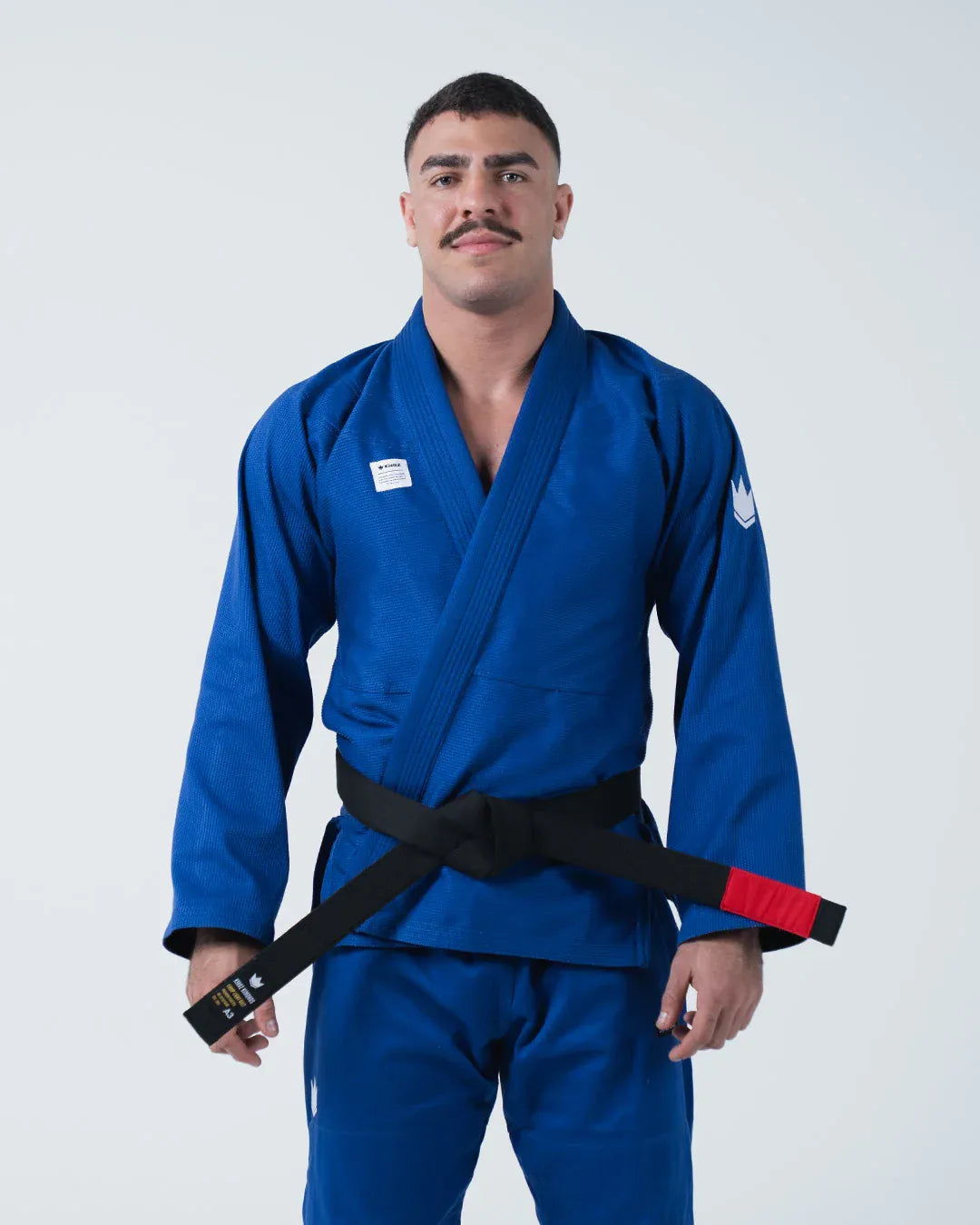
The BJJ Class Structure
At first glance, a BJJ class can look improvised. People warming up. Partners switching. A coach demonstrating something that seems very specific. But under the surface, there’s a rhythm most academies follow. One that has been shaped by safety, learning science, and a lot of hard-earned experience.
Phase 1: The Opening Ritual (5 - 10 minutes)
Class usually begins the same way, even if the room feels different every night.
-
The bow-in: This isn’t about ceremony for ceremony’s sake. It’s a moment of acknowledgment of the space, the instructor, and the people you’re about to train with. For many students, it’s the first mental shift of the day.
-
Mental transition: Work stays outside. Phones disappear. Whatever happened earlier gets parked at the edge of the mat. Jiu jitsu asks for attention, and this is where it starts.
It’s quiet. Brief. And intentional.
Phase 2: The Warm-Up - Building Functional Movement (15 - 20 minutes)
This part surprises newcomers. The warm-up doesn’t look like a typical gym routine, and that’s on purpose.
-
Movement with context: Shrimping, bridging, rolling, and technical stand-ups, these aren’t filler exercises. They’re the backbone of escapes, sweeps, and getting back to your feet when things go wrong.
-
Why it matters: You’re not just getting warm. You’re rehearsing survival mechanics under low stress, so they’re there when pressure shows up later.
-
Breakfalls and safety basics: Learning how to fall without injury is non-negotiable. These drills protect you now and months down the line, when training gets faster.
Phase 3: Technique Instruction - The Core of the Class (30 - 40 minutes)
This is where the room gets quieter and more focused.
-
The demonstration: Good instructors don’t rush. They show the movement from multiple angles, call out grips and weight placement, and explain why a detail matters, not just how it looks. They’re open for questions.
-
Static drilling: You practice with a cooperative partner. No resistance. No rush. This is about pattern recognition and building familiarity, not proving anything.
-
Instructor feedback: Coaches circulate, adjust grips, correct posture, and catch small mistakes early. These moments, brief and specific, often stick longer than the demonstration itself.
This phase rewards patience. The more attention you give here, the easier everything else becomes.
Phase 4: Positional or Situational Sparring (10 - 15 minutes)
Think of this as training with guardrails.
-
Controlled resistance: You start in a specific position with a clear goal. One person attacks. The other defends. When it ends, you reset and go again.
-
Common examples
-
Starting in closed guard
-
Passing from half guard
-
Escaping side control
-
Why it works: It bridges the gap between drilling and full rolling. You feel real pressure, but without the chaos of a completely open round. For beginners, this is often where things finally click, or almost click. Both are normal.
Deep Dive - What is Rolling in BJJ?
Rolling is the part everyone hears about first. It’s also the part most misunderstood.
Is it a street fight? No. And no, it’s not a test you pass or fail. Rolling is simply live training, two people applying jiu jitsu against real resistance, at a pace they agree on, with safety as the baseline.
What The Roll Actually Means
At its core, rolling is problem-solving under pressure.
-
Live application: Unlike drilling, your partner isn’t cooperating. They’re trying to advance position, escape, or submit you, using technique, timing, and whatever experience they have.
-
Constant adjustment: Positions shift. Plans break. You adapt or reset. Sometimes you get stuck. That’s normal.
-
Intensity varies: Not every round is hard. Many are technical, slow, even conversational. Good training partners meet you where you are, not where their ego wants to be.
Rolling looks chaotic from the outside. Inside, it’s structured learning, just louder and sweatier.
The Universal Safety Valve: The Tap
Everything in BJJ hinges on this one concept.
-
What tapping means: A tap is a reset. Nothing more. You’re signaling that the position or submission is done, and both people stop immediately.
-
How to tap
-
Physically: tapping your partner or the mat
-
Verbally: saying “tap” if your hands are trapped
-
Why it matters: There’s no toughness in refusing to tap. Longevity beats pride. Always.
Understanding the tap early is what makes long-term training possible.
The Beginner’s Experience
Most first rolls feel overwhelming.
-
The “drowning” sensation: Tight pressure. Limited movement. Breathing feels off. It’s uncomfortable, and it fades with time, even though it doesn’t feel like it will.
-
Energy spikes: New students often move too fast, too hard, too often. Adrenaline takes over. Muscles burn out quickly.
-
The learning curve: You won’t “see” submissions yet. You’ll miss openings. You’ll forget techniques you drilled ten minutes earlier. That’s part of the process, not a failure.
Managing the “Spazzy White Belt” Phase
It’s a stage.
-
Slow down on purpose: Breathe. Focus on posture and balance before strength.
-
Use technique first: If something only works when you’re muscling it, it probably isn’t working.
-
Listen to feedback: Coaches and higher belts will guide you, sometimes mid-roll, sometimes afterward. Take it in. They’re helping you skip mistakes they already made.
The Invisible Structure – Mat Etiquette
Some of the most important lessons in jiu jitsu aren’t taught during technique. They’re learned by watching, copying, and, occasionally, being corrected quietly after class.
Rules Every Beginner Should Know
You won’t get a handbook on day one, but these expectations are almost universal.
-
Hygiene comes first: Clean gi or no gi gear. Clipped nails. Showered body. No shoes on the mat, ever. Small things, but they protect training partners from infections and injuries.
-
Lineage and rank awareness: Higher belts are usually given space to choose partners or positions in line. It’s not hierarchy for ego’s sake; it’s a way to maintain order and flow in a busy room.
-
Control before intensity: Especially with less experienced partners. If you don’t know how much pressure you’re using, it’s probably too much.
Why We Don’t Celebrate “Winning” a Roll
This part can feel strange at first.
-
No fist pumps, no chest beating: A tap doesn’t mean you’re better than someone. It just means that the exchange is over.
-
Learning over outcome: The goal is to understand why something worked, or didn’t, not to collect submissions.
-
Room culture matters: Gyms that prioritize respect tend to produce students who train longer and get injured less.
Jiu jitsu rewards humility, even when your instincts say otherwise.

The Post-Class Culture: What Happens After the Timer
When class ends, training doesn’t always stop.
-
The mat chat: A quick question for the coach. A tip from a teammate. A shared laugh about a rough round. These moments fill in gaps technique alone can’t.
-
Asking questions: After class is often the best time, no rush, no pressure. This is where details get clarified.
-
Community over performance: People remember how you train, but they remember how you treat others longer.
That invisible structure, respect, cleanliness, restraint, and curiosity, is what keeps the academy feeling like a place you want to return to.
Variations Across BJJ Classes
While the core structure of a BJJ class stays consistent, small format changes affect pace, grips, and intensity. Here’s the short version.
|
Class Type |
What Changes |
What Stays the Same |
|
Gi |
More strategically oriented, more grip fighting, longer control-based exchanges |
Class length, structure, etiquette |
|
No-Gi |
Faster scrambles, fewer pauses, more emphasis on movement, and wrestling |
Warm-up → technique → sparring flow |
|
Women’s / Kids’ Classes |
Adjusted pace, teaching style, and round length |
Safety-first structure, fundamentals focus |
|
Open Mat |
No formal instruction, self-directed rounds |
Respect, tapping, mat awareness |
Different formats shift the feel of training, not the foundation. Once you understand the structure, adapting becomes easier.
Success Tips for Your First 90 Minutes
Your first class isn’t about performance. It’s about getting through the door, onto the mat, and back home in one piece, curious enough to return. A few things help more than people admit.
-
Hydrate early, eat light: Water matters. So does timing. A heavy meal too close to class has a way of making itself known halfway through warm-ups. Keep it simple.
-
Pace your effort: You don’t need to match anyone’s speed or strength. Breathe. Move with intention. Rest when told to rest.
-
Drop the idea of “winning”: There’s nothing to prove in your first 90 minutes. Pay attention instead to grips, balance, and how experienced partners move.
-
Ask one question: Just one. After class. It’s enough.
Finish the session tired, not discouraged. That’s a good first night.
Bottom Line
Forget the 60-to-90-minute runtime. In your first BJJ class, the hour disappears before you even realize you’re sweating.
The class flows from basic drills to technical work and then live rolling, so you’re always engaged. You don’t need to be a cardio machine to start; you just need to show up. It’s the consistency that sticks, long after you’ve left the gym.
FAQs
How long are BJJ classes for beginners?
Classes run about 60 minutes. Keeps things manageable while you learn warm-ups, technique, and controlled sparring without burning out.
Do you have to roll in your first BJJ class?
Not always. Some gyms ease you in through positional drills first. If you're nervous about it, just ask, or sit out the first round. Nobody's judging.
What is rolling in BJJ, in simple terms?
Live training with a resisting partner. You're testing techniques in real time. Safety matters, tapping out is normal, not weakness.
Are BJJ classes the same length everywhere?
Varies by gym, class type, and experience level. Open mats and competition sessions usually last longer and may not have a set end time.
Can you leave early if you need to?
Yes. Life happens. Just tell the instructor beforehand; it's basic mat etiquette and nobody minds.