News
What Is Gracie Jiu Jitsu? A Beginner-Friendly Breakdown

Ever see a smaller person shut down a heavyweight? It can look surprising at first, but the explanation is simple. It's more about leverage and mechanics. That leverage, pure and simple, is the heart of Gracie Jiu Jitsu. While many see the sport today, this lineage remains rooted in survival.
Below, we’ll answer one simple question: What is Gracie Jiu Jitsu?
The Roots: A Brief BJJ History
Brazilian jiu jitsu didn’t start in Brazil, and it didn't start as a modern competitive sport. If you’re asking what Gracie jiu jitsu is, the answer lives in a long, and maybe slightly messy chain of events, part tradition, part trial and error.
It begins in Japan.
Mitsuyo Maeda and a Practical Kind of Jiu Jitsu
Mitsuyo Maeda was a Kodokan judoka, trained at a time when Judo was still often called Kano jiu jitsu. This wasn’t the regulated, sport-focused version most people picture today. It was functional. Rough. Built to survive resistance.
Maeda didn’t stay put. He traveled. Across Europe. Across the Americas. Competing in exhibitions and challenge matches under different rules. He faced wrestlers, boxers, street fighters. Those years mattered because patterns kept repeating:
-
Fights collapsed into clinches
-
Throws didn’t always finish things
-
Ground played a decisive role.
By the time Maeda arrived in Belém, Brazil, in 1914, his approach emphasized practical application and live resistance.
The Gracie Family Steps In
Gastão Gracie helped Maeda settle in Brazil. In return, Maeda taught Gastão’s son, Carlos Gracie. Carlos learned the techniques, yes, but more importantly, he absorbed the idea behind them: efficiency beats force.
In 1925, Carlos opened the first Gracie Academy in Rio de Janeiro. The question wasn’t appearance, but:
-
What works consistently?
-
What holds up under pressure?
-
What helps someone smaller survive?
That mindset became the backbone of Gracie jiu jitsu.
Hélio Gracie and the Underdog’s Perspective
Then came Hélio. Smaller. Frequently sidelined. Not built for explosive throws. Instead of quitting, he adjusted everything. Bit by bit.
-
He emphasized efficiency and leverage to adapt to smaller practitioners
-
Fundamental guard concepts became a position of control
-
Defense came before offense
This helped the BJJ to find a direction. As Judo gradually emphasized stand-up techniques and game, Gracie jiu jitsu leaned into the ground. On the ground, size fades, but structure doesn’t.
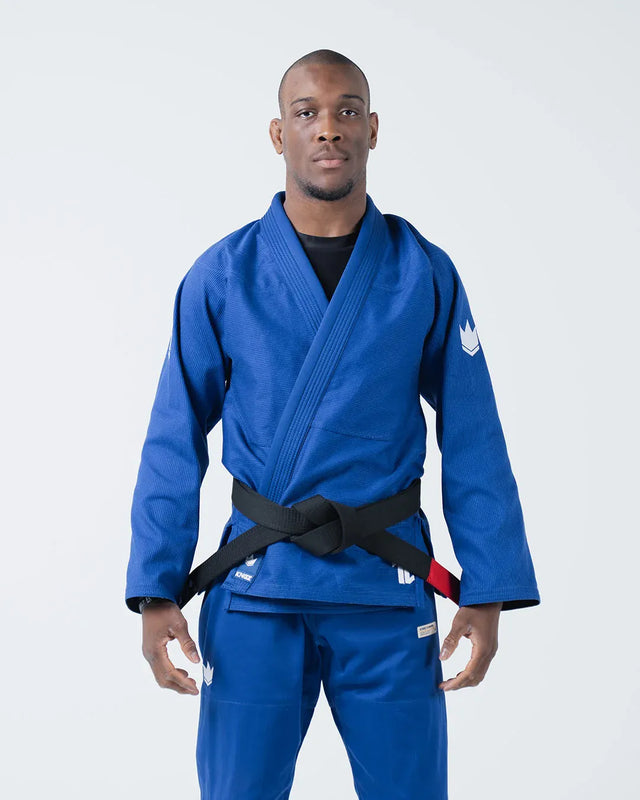
What Is Gracie Jiu Jitsu? Core Principles Explained
Once you look past the medals, the rulebooks, and the highlight reels, you may wonder, at its core, what is Gracie jiu jitsu really about? It’s a response to a simple, uncomfortable problem: Overcoming someone bigger and stronger than you. The answer isn’t speed or strength; It’s efficiency.
Gracie jiu jitsu works on a quiet assumption: if you don’t lose, you eventually win. The system is built to slow chaos down, to turn a wild situation into something manageable. Not by overpowering it, but by filtering every movement through a few hard rules.
Efficiency of Energy: Let Structure Do the Work
Efficiency comes first. GJJ treats the body like a lever. Posture matters more than muscle. Instead of tensing up and burning out, you learn to build frames and let bone structure carry the load.
When someone pushes, you redirect. When they pull, you follow. If a technique only works when you’re fresh, fast, or explosive, it doesn’t survive the Gracie filter.
Natural Movement Over Athleticism
Despite how modern sport BJJ can look, Gracie jiu jitsu favors movements that already make sense to the body. The focus stays on simple, repeatable movements that still are effective when adrenaline spikes and fine motor skills disappear.
These techniques are meant to work across ages and body types, not just for flexible twenty-year-olds. Because they’re natural, they’re easier to remember and easier to apply under pressure.
The Self-Defense Filter: Position First
Everything passes through a self-defense lens. In real situations, strikes exist. Head control and close-range strikes do happen. That changes priorities.
Distance management comes before submissions. Control comes before risk. You don’t chase a finish if it means giving up safety.
The Gracie Filter in Practice
Every technique gets tested with the same questions:
-
Does it rely on athleticism?
-
Does it leave you open to strikes?
-
Does it fail against a larger opponent?
If the answer is yes, it likely falls outside Gracie jiu jitsu’s core principles. What remains is a system built for reliability, not applause; designed to hold up when things get messy and stay honest when they do.
Gracie Jiu-Jitsu vs. Modern Brazilian Jiu-Jitsu
Walk into most gyms today, and you’ll hear GJJ and BJJ used interchangeably. They share the same foundation, but over time they’ve evolved into two expressions of the same art.
The difference isn’t about superiority. It’s about what problem you’re trying to solve.
Self-Defense First: Gracie Jiu-Jitsu (GJJ)
Gracie jiu jitsu prioritizes survival. Training assumes strikes are always possible. Guards stay conservative. Closed guard and punch-block positions protect the head. Clinch work matters because real fights usually start standing. With no round timer to rely on, energy conservation becomes essential. You wait, establish frames, and let the other person burn out first.
Competition Focused: Modern Sport BJJ
Modern BJJ is built around competition. With strikes removed, practitioners can take calculated risks. Inverted guards, lapel systems, and highly specialized techniques thrive under specific rulesets. Athleticism, timing, and conditioning often play a larger role, and progress comes through focused specialization.
The Gracie “Rule of Three”
To keep techniques grounded, some Gracie jiu-jitsu schools apply a simple filter:
-
Is it efficient?
-
Is it natural?
-
Does it hold up under real pressure?
If not, it stays in the sport category.
|
Focus Area |
Gracie Jiu-Jitsu (GJJ) |
Modern Sport BJJ |
|
Primary Goal |
Survival, control, and submission |
Control, points, and submission |
|
Strikes Considered |
Yes |
No |
|
Guard Style |
Conservative, protective |
Dynamic, risk-tolerant |
|
Energy Use |
Patient, economical |
Explosive, timed |
|
Specialization |
Broad fundamentals |
Narrow, rule-specific |
The Gracie Legacy and the Rise of BJJ Worldwide
For decades, the system remained largely misunderstood. In Brazil, For decades, the system remained largely misunderstood, and for many years, it was most known within Brazil. It wasn’t until the family tested their system publicly that the martial arts world took notice.
The Gracie Challenge Era
-
Open-invitation matches against Karate, Boxing, Luta Livre, and other styles
-
The purpose was research rather than ego; losses were studied and techniques refined.
-
Pattern emerged: striker attacks, Gracie clinches, fight goes to the ground, submission
-
Recorded matches became proof of concept, building credibility beyond Brazil
UFC 1 and Worldwide Recognition
-
November 12, 1993: Royce Gracie represents the family in the first UFC
-
At 176 lbs, Royce defeats larger opponents, proving technique over size
-
Introduced the world to ground fighting as a crucial skill
-
Triggered global demand for BJJ and the rise of academies worldwide
Some Modern Lineages and Schools
-
Gracie Humaitá: Hélio and Rickson’s strict technical focus
-
Gracie Barra: Carlos Jr.’s inclusive, community-oriented approach
-
Gracie University: Ryron and Rener emphasize self-defense and Combatives
-
Carlson Gracie Lineage: Aggressive style bridging self-defense and competition
Stepping onto the mats means more than learning moves; it’s participating in a living legacy, tested on the streets of Rio and showcased on the world stage.

What to Expect in a Gracie Jiu-Jitsu Class as a Beginner
Learning Jiu-Jitsu can feel unfamiliar and difficult for beginners. You’re greeted by a room of people in heavy cotton uniforms, called a gi, using leverage and pressure to solve positional problems.
It’s natural to feel the "white belt jitters," but in a Gracie-focused environment, the first day is designed to be structured, safe, and welcoming rather than a trial by fire.
The Role of the Gi
The gi is more than just a tradition; it’s a sophisticated tool for managing distance and controlling the opponent's posture and movements. For beginners, the gi provides friction, which slows the pace of the roll and allows you to actually process the mechanics of a move.
The collars, sleeves, and pants serve as a "handle system," teaching you how to neutralize an opponent’s posture or movements. Furthermore, it simulates real-world clothing like jackets or hoodies, grounding the training in self-defense reality.
A Typical Class Structure
While every academy has its own "flavor," most follow a rhythm designed to build skills without burning you out:
-
Functional Warm-ups: You’ll learn "shrimping" (hip movement), technical stand-ups, and break-falls, movements that form the building blocks of the art.
-
Technique Breakdown: Instructors demonstrate a specific scenario, like escaping a "mount," breaking it into manageable steps.
-
Drilling: You’ll practice these moves on a non-resisting partner to build muscle memory and mechanical precision.
-
Positional Sparring: Instead of a chaotic fight, you’ll engage in low-ego "mini-games" with specific goals, allowing you to test new techniques in a controlled setting.
Cooperation Over Competition
The Gracie philosophy views your training partner as your most valuable asset. In a GJJ class, the intensity is "dialed in" to your specific skill level.
You’ll find that higher belts are mentors rather than rivals, providing just enough resistance to help you learn. This creates a controlled learning environment rather than a competitive one. Don’t worry about your current fitness level; "jiu-jitsu shape" is earned on the mats, one round at a time.
Why Many Beginners Start with Gracie Jiu Jitsu
Modern grappling can feel overwhelming for beginners, which is why many newcomers choose the Gracie-specific path.
The difference isn't just the moves, but the delivery system. It is designed for those who have never stepped on a mat.
-
The Logic of Structure Rather than a “technique of the week” approach, many Gracie jiu jitsu programs follow a structured, scenario-based curriculum. Students focus on high-percentage responses to common situations, such as escaping the mount or defending strikes, instead of collecting isolated moves. This kind of fixed progression provides a clear checklist of foundational survival skills.
-
Progressive Sparring GJJ replaces the "baptism by fire" of day-one live rolling with a measured entry. By delaying unrestricted sparring, academies minimize the panic response and protect students from common injuries. Beginners start with "cooperative resistance," building technical confidence at 50% intensity.
This approach recognizes that most practitioners aren't 22-year-old elite athletes; they have jobs and responsibilities. By providing a safe, ego-free environment, Gracie Jiu-Jitsu ensures you can pursue the art for twenty years, not just twenty days.
Bottom Line
Gracie jiu-jitsu isn't just a series of moves, but one of the main foundations of Brazilian jiu jitsu. While the sport side has exploded into these athletic showdowns and clever tournament tricks, the Gracie way sticks to the core principle of allowing smaller practitioners to defend themselves effectively.
It's all about hanging in there with smart patience, staying safe, and mastering leverage-based techniques that don’t rely on strength.
FAQ
Is Gracie Jiu-Jitsu different from BJJ?
GJJ is the original self-defense-focused system, while BJJ often refers to the modern sport and competition ruleset.
Can I start GJJ if I’m not in shape?
Yes. Jiu jitsu shape is built on the mats; the techniques are specifically designed to rely on leverage rather than athleticism.
How long does it take to get a blue belt?
It typically takes 1 to 2 years of consistent training, depending on the academy’s specific curriculum and your attendance.
Is Gracie jiu jitsu effective for street self-defense?
Yes; it’s designed to neutralize larger attackers and includes punch-block strategies that sport-only programs might skip.
Can women train Gracie jiu jitsu?
Absolutely. Because the art emphasizes leverage over strength, it is widely considered one of the most effective martial arts for women.
Is there an age limit to start?
No. Many start in their 40s or 50s; the art is designed for longevity and safe, sustainable movement.