

Nouvelles
Exercices de BJJ : choisir entre exercices solo, rounds techniques et entraînement axé sur le combat

Les progrès ne stagnent pas parce que vous arrêtez de vous entraîner. Ils stagnent parce que le travail ne correspond plus à l'objectif. Les exercices de BJJ, qu'ils soient en solo, avec un partenaire ou entièrement libres, servent des objectifs différents à des moments différents. Savoir lesquels utiliser et quand, c'est ce qui vous permet de développer vos habiletés sans user votre corps. Cet équilibre compte.
Les exercices de BJJ en solo : bâtir le plan de base
Avant le timing, avant la pression, avant les rounds qui vous brûlent les poumons, il y a le mouvement. Pas un mouvement spectaculaire. Un mouvement fondamental, celui qui se manifeste chaque fois que vous faites une crevette propre ou que vous vous relevez sans y penser.
Les exercices de BJJ en solo se situent ici. Ce sont des mouvements individuels et répétables qui développent ce que beaucoup d'entraîneurs appellent la littératie corporelle : la compréhension de la façon dont vos hanches, votre colonne et votre base doivent bouger sur le tatami. Vous ne réagissez pas encore à un adversaire. Vous enseignez d'abord le langage à votre corps.
Pour les débutants, c'est ici que les schémas s'apprennent. Pour les grapplers expérimentés, c'est ici qu'on enlève la rouille.
L'un des plus grands avantages des exercices de BJJ en solo, c'est le contrôle. Vous décidez du rythme, protégez votre peau des brûlures de tatami et bougez librement. Cela les rend idéaux pour le travail quotidien, surtout les jours où vos articulations sont raides ou où votre horaire vous tient loin du tatami. Dix minutes tranquilles peuvent faire beaucoup.
L'essor du mannequin de grappling a élargi les possibilités de l'entraînement en solo. Il fait le pont entre les exercices dans le vide et le travail avec un partenaire, en vous permettant de répéter le placement du poids, les angles et les transitions sans résistance.
Pour l'entraînement à la maison ou quand le temps à l'académie est limité, c'est un outil pratique : il ne remplace pas un partenaire, mais c'est un substitut utile.
Au minimum, les séances d'exercices de BJJ devraient inclure les bases :
-
Des sorties de hanches et des ponts pour renforcer les mouvements défensifs
-
Des relevés techniques pour l'équilibre et la posture
-
Des mouvements de tronc qui font travailler votre colonne et vos hanches ensemble
À partir de là, les athlètes plus avancés ajoutent souvent du travail en flow. Roulades inversées. Schémas de récupération de garde. Même des séquences inspirées du yoga adaptées au BJJ.
Il ne s'agit pas de souplesse pour la souplesse; ces exercices favorisent la mobilité des hanches et la santé des articulations, ce qui prolonge discrètement votre temps sur le tatami.
Les meilleures académies le comprennent. Les meilleures équipes utilisent régulièrement les exercices de BJJ en solo comme point de référence. Si vous manquez de souffle en faisant des crevettes pendant un combat libre, le problème n'est parfois pas le conditionnement, mais l'efficacité.
Les exercices en solo ne gagneront pas de combats à eux seuls. Ce n'est pas leur rôle. Leur rôle est plus simple et plus important : s'assurer que votre corps est prêt quand la pression arrive et vous aider à développer la conscience corporelle nécessaire pour exécuter les mouvements efficacement en situation réelle.
-
 Rashguards DE PERFORMANCE
Rashguards haut de gamme pour hommes | KiNGZ™
Conçus pour l'entraînement intense et la compétition
Magasiner
Les rounds techniques : le pont vers la maîtrise
C'est ici que les choses commencent à se connecter.
Les rounds techniques se situent entre les exercices en solo ou avec partenaire et le sparring complet. Vous vous entraînez avec un partenaire, mais le but n'est pas de gagner le round : c'est d'être capable d'exécuter une technique en situation réelle. Il s'agit de comprendre comment un angle se ressent vraiment. Pourquoi une prise échoue. Où votre poids doit se trouver quand le timing compte.
À leur meilleur, les exercices techniques de BJJ remplacent la répétition machinale par l'intention.
Contrairement aux exercices statiques sans résistance, les académies modernes misent sur la résistance progressive. Pas le chaos. Pas une défense qui bloque tout. Juste assez d'opposition, sans résistance complète, pour forcer de vrais ajustements sans briser l'échange.
Pourquoi c'est important :
-
Aucune résistance cache les erreurs
-
Une résistance complète freine l'apprentissage
-
Une résistance contrôlée révèle les deux
C'est ici que le volume devient utile. Vous pouvez répéter la même entrée ou la même transition des dizaines de fois dans une séance, en faisant de petites corrections qui disparaîtraient dans un combat libre.
Les principaux avantages des rounds techniques comprennent :
-
Des répétitions de grande qualité sans épuisement
-
De l'espace pour peaufiner des micro-ajustements comme :
-
La répartition du poids
-
Le placement des prises
-
L'angle des hanches et la position de la tête
-
Une pratique plus sécuritaire des systèmes complexes qui ne tolèrent pas le chaos au début
Les enchevêtrements de jambes, les bolos, les séquences de passage de garde : ces systèmes exigent de la précision avant la pression. Les exercices techniques de BJJ vous donnent cette piste d'élan.
Beaucoup d'académies abordent maintenant ce travail avec une approche écologique ou par tâches. Au lieu de mémoriser des étapes, on vous donne une contrainte ou un objectif simple :
-
« Passez sans permettre la récupération de garde. »
-
« Maintenez la position du dessus pendant 20 secondes. »
-
« Empêchez la garde de se fermer. »
L'exercice s'adapte à mesure que votre partenaire réagit. Vous résolvez des problèmes, vous ne récitez pas des mouvements.
Il y a aussi un avantage plus discret. C'est dans les rounds techniques que la confiance se bâtit. Pas la bravade. Une vraie confiance, celle qui vient de savoir que vous avez déjà ressenti cette position des centaines de fois, sans vous précipiter.
Les exercices en solo enseignent à votre corps comment bouger. Les exercices techniques de BJJ lui enseignent quand et pourquoi.
Ce pont compte.
L'entraînement axé sur le sparring : le test de pression
À un moment donné, les exercices doivent affronter la résistance. Une vraie résistance.
L'entraînement axé sur le sparring révèle le timing, et les décisions ont un prix. Vous ne pouvez pas faire de pause. Pas de remise à zéro. Tout ce que vous avez bâti en solo et dans les rounds techniques se manifeste, ou non.
C'est le test de pression.
Le combat libre développe des qualités qu'aucun exercice ne peut remplacer :
-
Le conditionnement cardiovasculaire sous charge
-
La maîtrise émotionnelle quand les choses tournent mal
-
La capacité de respirer, de réfléchir et de bouger pendant que quelqu'un essaie de vous neutraliser
Le sparring positionnel est souvent le format le plus productif. Partir de la montée, du contrôle latéral ou d'une garde précise force la répétition sous résistance complète sans perdre des rounds à se battre pour l'entrée.
-
Des boucles de rétroaction plus rapides
-
Un succès et un échec clairs
-
Un transfert direct vers la compétition et l'autodéfense
Cette approche est plus efficace que les rounds interminables « à partir des genoux » pour acquérir des habiletés, surtout quand le temps est limité.
S'entraîner fort a sa place, mais tout donner à chaque round n'est pas toujours le choix le plus intelligent. Pousser le rythme constamment augmente le risque de blessures inutiles et d'épuisement.
C'est pourquoi les pratiquants expérimentés varient leur intensité. Les combats en flow, les rounds intenses choisis et le choix judicieux des partenaires d'entraînement ne sont pas des signes de complaisance, mais la façon dont les gens restent assez constants pour vraiment progresser.
Vous verrez cet équilibre dans les salles axées sur la compétition. Certaines académies sont connues pour leurs formats difficiles : shark tanks, king of the hill, le gagnant reste. Ces séances développent rapidement la ténacité et le sang-froid. Elles sont efficaces. Elles sont aussi exigeantes.
Utilisé à l'occasion, l'entraînement axé sur le sparring aiguise tout. Utilisé sans discernement, il écourte les carrières.
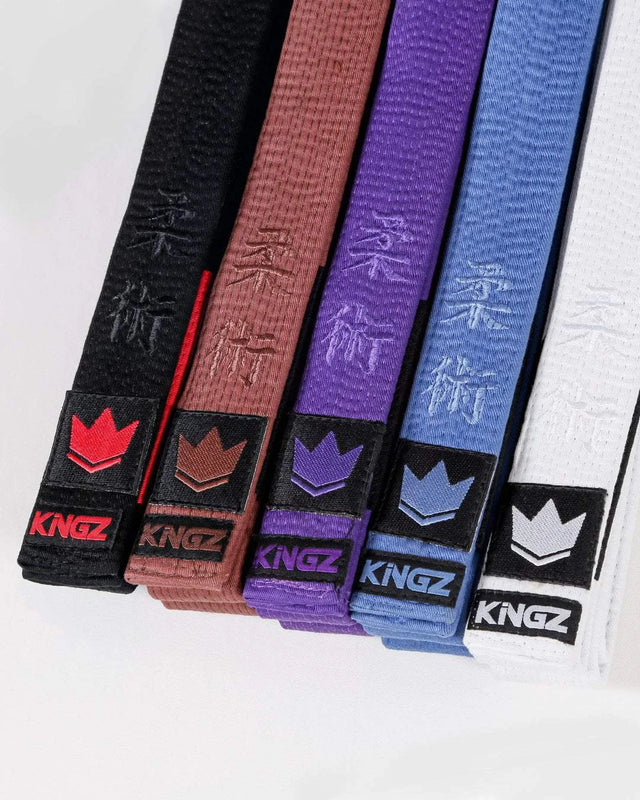
Ceinture de Jiu-Jitsu Reign Supreme
100 % coton de haute qualité
MagasinerComparaison et stratégie : comment équilibrer votre semaine
Tous les exercices de BJJ n'ont pas la même importance. Certains jours, vous devez bouger en solo, d'autres jours, vous avez besoin d'un partenaire, et d'autres encore, vous avez besoin d'entraînements musculaires qui soutiennent votre performance en BJJ.
Tout dépend de ce que votre corps et votre semaine peuvent supporter. Les athlètes plus jeunes peuvent généralement faire plus de combats libres, mais si vous êtes plus âgé ou que vous vous entraînez simplement pour le plaisir, miser sur les rounds techniques et les exercices de BJJ en solo vous garde en mouvement sans en payer le prix plus tard. Voici un résumé clair :
|
Catégorie d'exercice |
Intensité |
Objectif principal |
Fréquence recommandée |
|
Exercices en solo |
Faible |
Mécanique corporelle et mobilité |
Tous les jours (10 à 15 min) |
|
Rounds techniques |
Faible à moyenne |
Acquisition et perfectionnement des habiletés |
2 à 4 fois par semaine |
|
Sparring positionnel |
Moyenne à élevée |
Maîtrise de positions précises |
1 à 2 fois par semaine |
|
Sparring libre |
Élevé |
Test de pression et conditionnement |
1 à 2 fois par semaine |
En résumé
Le Jiu-Jitsu ne se construit pas avec un seul mode d'entraînement. Il se construit par couches.
Les exercices en solo donnent à votre corps une structure qui bouge bien. Les rounds techniques ajoutent de la structure et de l'efficacité. Le sparring applique la pression et dit la vérité. Chacun a un rôle. Chacun a un coût. Quand ils sont équilibrés, les progrès restent réguliers et durables.
Le but n'est pas de s'entraîner moins ou plus fort. C'est de s'entraîner avec conscience. Choisissez le bon exercice de BJJ pour la journée, respectez la récupération autant que l'effort et continuez à vous présenter avec intention. C'est comme ça qu'on reste sur le tatami.
FAQ
Que sont les exercices de BJJ en solo?
Des mouvements individuels qui développent la mécanique corporelle, la mobilité et les schémas de base sans partenaire.
Pourquoi utiliser un mannequin de grappling?
Il fait le pont entre les exercices dans le vide et l'entraînement réel, et vous permet de répéter les angles et les transitions en toute sécurité à la maison.
En quoi les rounds techniques diffèrent-ils du sparring?
Les rounds techniques utilisent une résistance contrôlée pour peaufiner le timing, les prises et la conscience positionnelle sans pression complète.
Qu'est-ce que la résistance progressive?
Ajouter de 10 à 30 % de résistance dans les exercices de BJJ avec partenaire pour révéler les erreurs tout en gardant la fluidité.
À quelle fréquence faire des exercices en solo?
Tous les jours; même 10 à 15 minutes aident à maintenir la mobilité, la santé des articulations et les schémas de mouvement.
Comment équilibrer exercices et sparring dans une semaine?
Ajustez selon vos objectifs et votre âge, en combinant séances en solo, techniques et axées sur le sparring pour la récupération et la rétention des habiletés.