

Nouvelles
Promotions rapides ou lentes : qu'est-ce qui est mieux?

Voir un partenaire d'entraînement se faire promouvoir peut vous amener à vous demander si votre propre progression stagne. Beaucoup se demandent comment devenir bon en Jiu-Jitsu rapidement, mais la vitesse n'est qu'une partie du parcours.
Ci-dessous, nous examinons les compromis entre une progression de ceinture rapide et une progression régulière en BJJ. Nous verrons aussi les délais de l'IBJJF et comment miser sur la maîtrise technique.
Le fonctionnement de la progression des ceintures en BJJ
Avant de débattre entre rapide et lent, il est utile de prendre du recul et de regarder ce qu'on mesure vraiment.
Le Jiu-Jitsu brésilien n'est pas structuré comme la plupart des sports. Il n'y a pas de repêchage saisonnier. Pas de dates d'examen fixes. Pas de programme standardisé qu'on coche comme un examen de conduite. La promotion se fait par couches. Parfois claire. Parfois opaque.
Comprendre le fonctionnement du système de grades en BJJ peut clarifier ce que les instructeurs évaluent généralement à chaque étape.
Pour les adultes, l'échelle des ceintures semble simple sur papier : Blanche → Bleue → Violette → Marron → Noire
Une liste simple. Un parcours qui ne l'est pas.
Ce que disent vraiment les règles
Voici quelque chose qui surprend : selon les règles de l'IBJJF, il n'existe aucune durée minimale entre la ceinture blanche et la ceinture bleue. Aucune. En théorie, quelqu'un pourrait obtenir sa ceinture bleue rapidement si son instructeur estime qu'il en a le niveau.
Après cela, en revanche, le rythme se resserre :
-
De la bleue à la violette : minimum 2 ans
-
De la violette à la marron : minimum 1,5 an
-
De la marron à la noire : minimum 1 an
Il s'agit d'admissibilité en compétition, pas d'une promesse de promotion. Mais cela montre quelque chose d'essentiel : même aux plus hauts niveaux, la vitesse a des garde-fous.
Donc, quand on parle de devenir bon en Jiu-Jitsu rapidement, on parle généralement des premières étapes. Et même là, ça dépend.
La moyenne et l'exception
Il faut en moyenne environ 10 ans pour obtenir une ceinture noire, et dans bien des cas, encore plus.
Mais vous entendrez des histoires de quatre, cinq ou six ans. Ces cas ont généralement quelques points en commun :
-
S'entraîner 5 à 6 jours par semaine (parfois deux fois par jour)
-
Compétitionner constamment
-
Avoir accès à un encadrement et à des partenaires de haut niveau
-
Avoir un corps capable d'encaisser la charge
Autrement dit, « rapide » veut souvent simplement dire beaucoup de volume et beaucoup d'intention.
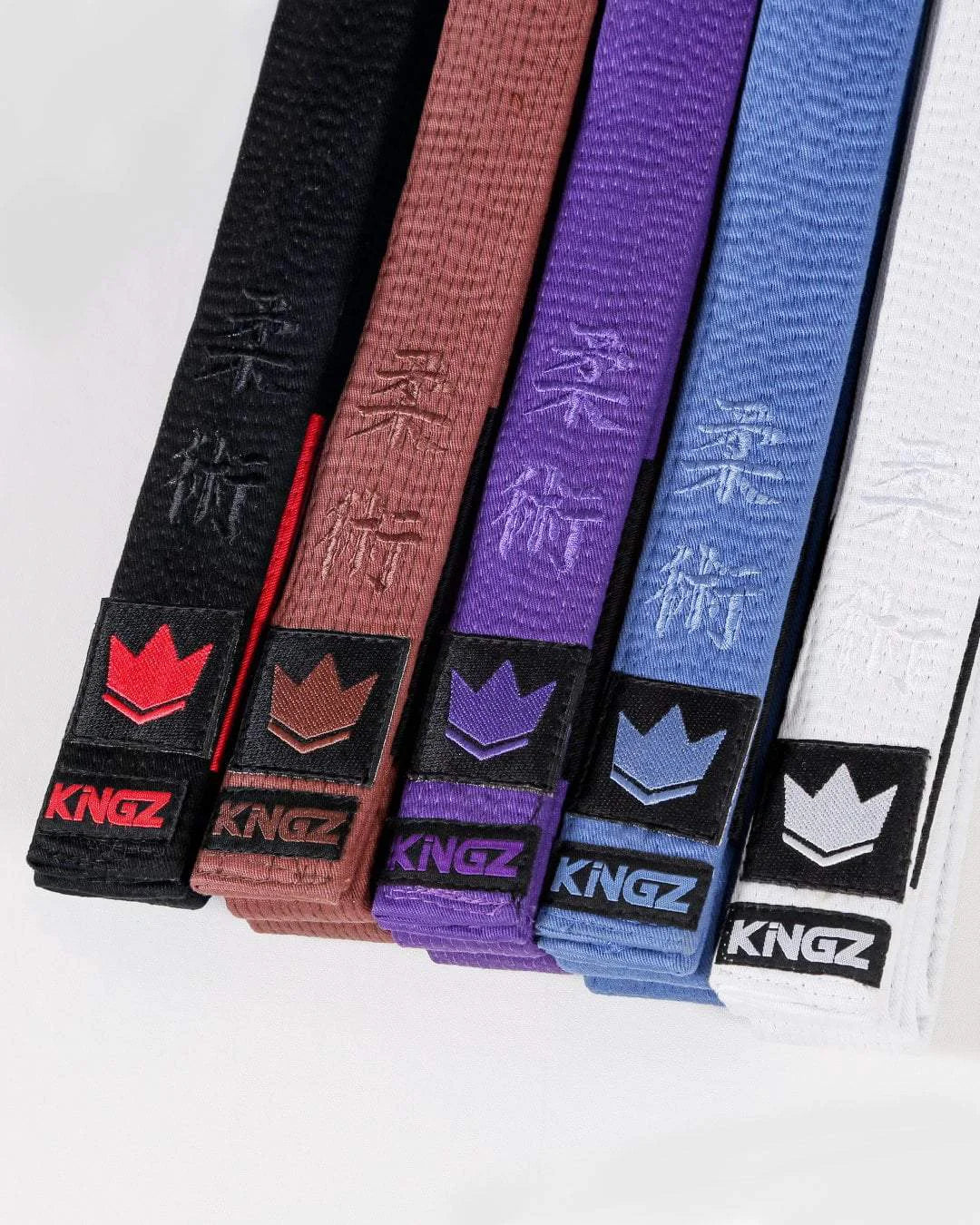
Ceintures prêtes pour la compétition | Kingz™
Toutes les couleurs, tous les niveaux
MagasinerCe que mesure vraiment la progression des ceintures en BJJ
Il ne s'agit pas seulement du nombre de techniques que vous pouvez énumérer. C'est un mélange de bases essentielles du BJJ :
-
La compréhension technique (savez-vous ce qui se passe?)
-
L'efficacité en sparring (pouvez-vous l'appliquer en situation réelle?)
-
La régularité (vous présentez-vous, même quand ce n'est pas pratique?)
-
Le sang-froid (comment réagissez-vous sous pression?)
Ce dernier point compte plus qu'on ne le pense. Parce que les ceintures ne récompensent pas les moments spectaculaires. Elles récompensent les tendances.
Alors, quand vous vous demandez comment devenir bon en Jiu-Jitsu rapidement, la meilleure question serait peut-être : que veut vraiment dire « bon »? Plus de soumissions? Moins d'erreurs? Une meilleure défense? Des décisions plus claires?
Les promotions rapides : beaucoup d'élan, beaucoup de pression
Une promotion rapide, ça fait du bien.
Vous vous entraînez fort. Vous restez après les cours. Vous faites du rolling avec des ceintures plus avancées sans couler à chaque round. Puis un jour, on appelle votre nom. Nouvelle ceinture. Poignée de main rapide. Peut-être que vos partenaires s'alignent pour le traditionnel couloir de ceintures.
Mais les promotions rapides ne sont pas automatiquement imprudentes. Dans certains cas, elles sont proportionnelles.
Conseil de pro : à mesure que vous progressez dans les grades, avoir plusieurs kimonos de BJJ pour l'entraînement et la compétition peut vous aider à vous préparer dans différentes conditions.
Quand « rapide » a vraiment du sens
Il existe un certain profil, généralement évident quand on le voit.
L'athlète qui :
-
s'entraîne 5 à 6 jours par semaine
-
compétitionne régulièrement
-
étudie des combats en dehors du club
-
considère la récupération comme une partie de l'entraînement
Pour cette personne, une progression de ceinture plus rapide ne saute pas d'étapes. Elle comprime le temps, parce que les heures de tatami s'accumulent vite. Une année de ce mode de vie peut équivaloir à trois ans de présence occasionnelle.
Des progrès rapides au début peuvent éviter ce passage à vide silencieux que beaucoup de ceintures blanches vivent vers le huitième mois : la phase du « est-ce que je m'améliore vraiment? ».
Une promotion au bon moment peut :
-
renforcer la régularité
-
accroître le sens des responsabilités
-
vous placer dans des groupes d'entraînement plus exigeants
-
élever le niveau de vos rounds
Les ceintures plus avancées attendent davantage de vous. Alors soit vous vous élevez, soit vos failles sont exposées. Parfois les deux. Et cette exposition, aussi inconfortable soit-elle, vous aiguise.
Le revers : le problème de la ceinture de papier
Maintenant, l'autre côté de la médaille.
Une ceinture qui dépasse votre niveau réel peut sembler lourde. Pas physiquement. Mentalement.
Vous êtes promu, puis la semaine suivante, une ceinture inférieure vous soumet deux fois. Peut-être trois. Soudain, ce nouveau grade peut ressembler à de la pression.
C'est ce qu'on appelle une ceinture de papier. La couleur a changé. Les bases techniques n'ont pas suivi.
Cela peut mener à :
-
douter de votre jeu
-
éviter les rounds difficiles
-
jouer de façon trop prudente
-
un syndrome de l'imposteur silencieux
Et voici l'ironie : sauter des étapes dans la progression peut en fait vous empêcher de devenir bon rapidement en Jiu-Jitsu.
Pourquoi? Parce que la vraie vitesse de progression vient d'un plan B fiable. Un système de repli. Des sorties solides. Une défense calme. Les aspects peu glorieux. S'ils ne sont pas construits, votre progression devient fragile. Un seul mauvais round ébranle tout.
Les promotions rapides augmentent les attentes. Cela augmente le stress. Et le stress révèle les failles.
Pour certains athlètes, cette pression forge la résilience. Pour d'autres, elle brise la confiance. Aucun de ces résultats n'est automatique. Tout dépend des bases sous la ceinture.
Les promotions lentes : l'avantage du « sandbagger »
Vous avez déjà vu cette personne aussi.
La même ceinture depuis des années. Efficace. Rarement en difficulté. Quand des visiteurs passent, ils pensent qu'il a un grade plus élevé. Quelqu'un chuchote : « Il est encore ceinture bleue? » Et la réponse est généralement un demi-sourire.
En Jiu-Jitsu, se faire traiter de « sandbagger » est presque un compliment.
Cela veut dire que vous êtes surpréparé pour votre grade.
L'avantage de rester plus longtemps
Quand les promotions avancent lentement, quelque chose d'intéressant se produit. Les couches s'empilent.
Au lieu de vous précipiter pour élargir votre jeu, vous l'approfondissez. Votre garde ne fait pas que fonctionner; elle a des plans de rechange. Vos passages ne sont pas seulement agressifs; ils sont contrôlés. Vous avez échoué assez souvent à cette ceinture pour colmater les failles évidentes.
Une progression de ceinture lente en BJJ développe souvent :
-
La densité technique : pas seulement des techniques, mais les liens entre elles
-
Une défense fiable : des sorties qui tiennent sous pression
-
La reconnaissance des schémas : vous voyez les pièges avant d'y tomber
-
Le contrôle émotionnel : moins de pics, moins d'échanges paniqués
Il y a aussi un bienfait psychologique dont on parle peu.
Quand vous passez plus de temps à un grade, vous vous détachez peu à peu de la course au suivant. L'ego encaisse quelques coups. Et ce n'est pas une mauvaise chose.
Autre point à noter : les élèves qui s'installent dans leur ceinture et progressent patiemment sont souvent moins ébranlés par le « blues de la ceinture bleue ». Ils ont déjà accepté que la progression soit inégale. Certaines semaines, on se sent affûté. D'autres, maladroit. On continue de se présenter quand même.
Le facteur frustration
Mais une progression lente n'est pas automatiquement noble.
Il arrive un moment où la patience se transforme en stagnation.
Vous pourriez commencer à vous dire :
-
Qu'est-ce que je dois faire?
-
Est-ce qu'on m'oublie?
-
Est-ce juste de la politique?
Ce dialogue intérieur peut miner la motivation. L'impression d'être une éternelle ceinture blanche est bien réelle.
Il y a aussi un risque plus discret : le confort.
Si vous dominez à votre grade, vous risquez d'arrêter d'élargir votre jeu. Vous jouez ce qui fonctionne. Vous évitez d'expérimenter. La progression plafonne, non pas par manque de talent, mais parce que rien ne vous oblige à vous adapter.
Une nouvelle ceinture peut servir de coup de pouce. Sans elle, vous devez créer votre propre pression.
Les promotions lentes produisent souvent des grapplers techniquement solides. Mais seulement si l'athlète reste intentionnel. Sinon, le temps seul n'équivaut pas à la progression.
La lenteur peut bâtir des fondations en granit. Ou des habitudes que vous ne remettez jamais en question.
Les variables qui dictent votre rythme
Deux élèves disent tous deux s'entraîner depuis trois ans. L'un est ceinture bleue et approche la violette. L'autre est encore une jeune ceinture bleue. Les gens commencent à comparer. À faire des calculs dans leur tête.
Mais les années ne racontent pas toute l'histoire. Les heures de tatami, oui.
Les heures de tatami et les années au calendrier
Une personne qui s'entraîne cinq jours par semaine pendant un an accumule environ 250 séances. Une personne qui s'entraîne une fois par semaine pendant trois ans? Environ 150.
Le même temps dans le sport. Une exposition très différente.
La régularité se cumule. La fréquence accélère la reconnaissance des schémas. Il n'y a aucun raccourci pour éviter les rounds en situation réelle.
Plus de temps sur le tatami signifie généralement :
-
une correction des erreurs plus rapide
-
plus d'aisance dans les mauvaises positions
-
des transitions plus propres malgré la fatigue
La taxe du compétiteur
Celle-ci surprend les nouveaux élèves.
Les compétiteurs de haut niveau restent souvent plus longtemps à un grade, non pas parce qu'ils sont bloqués, mais parce qu'ils y dominent. Gagner les Mondiaux ou les Pan Ams à une ceinture a du poids. Les promotions attendent parfois la fin des grandes saisons de compétition.
Vu de l'extérieur, ce séjour prolongé peut ressembler à une progression lente.
Mais au club, tout le monde sait ce qui se passe.
La voie du pratiquant de loisir
La plupart des pratiquants ne s'entraînent pas deux fois par jour. Ils jonglent avec leur carrière, leur famille et des blessures qui exigent un vrai repos.
L'âge, la capacité de récupération, le stress au travail : tout cela compte. Un compétiteur de 22 ans et un parent de deux enfants de 42 ans n'avanceront pas au même rythme. Et ils ne devraient pas.
Une progression de ceinture saine en BJJ tient compte de la vie en dehors de l'académie.
Et voici ce qu'on n'aime pas entendre : parfois, plus lent est plus durable. Ce qui est durable vous garde sur le tatami. Et rester sur le tatami est, au bout du compte, la vraie réponse à la question de comment devenir bon en Jiu-Jitsu rapidement.
Parce que la vitesse ne fonctionne que si vous ne vous épuisez pas.
Comment mériter votre vitesse : conseils pour progresser
Vous ne contrôlez pas entièrement le moment de votre promotion. Cela revient à votre instructeur. Ce que vous contrôlez, c'est votre façon de vous entraîner cette semaine. Et la suivante.
Si l'objectif est de devenir bon en Jiu-Jitsu rapidement, la réponse n'est généralement pas d'apprendre plus de soumissions. C'est moins glorieux que ça.
|
Aspect |
Actions clés |
Pourquoi c'est important |
|
La défense d'abord |
Sortir du contrôle latéral, survivre calmement sous la montée, défendre le contrôle du dos, cadrer efficacement |
Une défense solide prolonge les rounds, donne plus de répétitions et vous permet d'expérimenter en toute sécurité |
|
S'entraîner avec intention |
Choisir une position par mois, noter vos erreurs, poser une question ciblée, commencer les rounds depuis vos points faibles |
L'orientation et la concentration transforment la présence en progrès mesurables |
|
Chercher le défi |
Faire du rolling avec des ceintures plus avancées et des partenaires qui mettent à l'épreuve, commencer les rounds en désavantage |
Une difficulté bien dosée révèle les failles, élargit les compétences et accélère l'adaptation |
|
Faire confiance au processus |
Suivre les conseils de l'instructeur, miser sur les compétences plutôt que sur le calendrier des ceintures |
Les promotions reflètent une progression régulière; se précipiter peut limiter le développement |
|
Un état d'esprit professionnel |
Kimono propre, ongles courts, équipement bien ajusté |
Montre votre sérieux, améliore votre concentration et encourage les autres à s'entraîner sérieusement avec vous |
En résumé
Il est tentant de mesurer la progression à la couleur de la ceinture. Elle se voit. Elle est belle en photo. Mais sur le tatami, quand les prises sont installées et que quelqu'un essaie de passer votre garde, rien de tout cela ne compte.
Plus vite n'est pas mieux. Plus juste, oui.
Plus juste veut dire que votre timing correspond à votre grade. Que votre défense tient. Que vos décisions ont du sens sous pression. Cela veut dire que votre progression de ceinture en BJJ reflète ce que vous pouvez faire de façon constante, et non ce que vous avez réussi une fois, un bon jour.
Certains athlètes avanceront rapidement. D'autres prendront le chemin le plus long. Les deux peuvent produire d'excellents grapplers.
Au bout du compte, la ceinture noire n'est pas le résultat d'un sprint. C'est une accumulation de journées. De rounds discrets. De corrections techniques. De leçons d'humilité. Et du choix, encore et encore, de ne pas abandonner. Parce qu'une ceinture noire n'est qu'une ceinture blanche qui n'a jamais arrêté de s'entraîner.
FAQ
Être promu plus vite veut-il dire que vous progressez plus vite?
Pas nécessairement. Une promotion plus rapide reflète souvent un plus grand volume d'entraînement ou des succès en compétition. La progression dépend de la profondeur des compétences, pas seulement de la vitesse à laquelle on change de grade.
Y a-t-il une durée minimale pour chaque ceinture?
Selon les règles de l'IBJJF, il n'y a pas de minimum entre la ceinture blanche et la ceinture bleue. Après la bleue, des durées minimales s'appliquent pour l'admissibilité en compétition aux grades supérieurs.
Qu'est-ce qui compte le plus : le temps passé ou les heures de tatami?
Les heures de tatami. Une personne qui s'entraîne cinq fois par semaine pendant un an peut progresser plus vite qu'une personne qui s'entraîne une fois par semaine pendant trois ans.
Les promotions lentes peuvent-elles vraiment aider le développement à long terme?
Oui. Passer plus de temps à une ceinture développe souvent une défense plus solide, une meilleure reconnaissance des schémas et le contrôle émotionnel, des fondations qui soutiennent les grades supérieurs plus tard.
Quelle est la façon la plus rapide de s'améliorer en Jiu-Jitsu?
Misez sur la défense, entraînez-vous avec intention, cherchez des rounds exigeants et restez régulier. La vitesse de progression vient généralement d'une répétition disciplinée, pas de raccourcis.