

Nouvelles
Kimono ou No-Gi : les vraies différences (et lequel pratiquer en premier)

La plupart des académies offrent des cours en kimono et en No-Gi. Le kimono est généralement plus axé sur les prises, tandis que le No-Gi est habituellement plus rapide et plus dynamique. Si vous débutez, vous vous demandez peut-être ce qu'est le kimono au Jiu-Jitsu. C'est l'uniforme traditionnel dont les manches et le col servent de poignées. Un style repose sur la friction, l'autre sur le mouvement. Les deux demandent de la patience et de la constance.
Ci-dessous, nous expliquons les différences, comparons le kimono et le No-Gi, et vous disons par où commencer.

Qu'est-ce que le kimono au Jiu-Jitsu?
La première chose que remarquent la plupart des débutants, c'est l'uniforme en coton épais et renforcé.
Dès que vous montez sur le tatami, son utilité devient évidente. Si vous vous demandez ce qu'est le kimono au Jiu-Jitsu, voyez-le comme un outil de contrôle. Chaque manche, chaque col et chaque jambe de pantalon peut être utilisé par vous ou par votre adversaire.
Le kimono crée un jeu qui favorise la technique plutôt que la force :
-
Friction : le coton absorbe la sueur, ce qui rend plus difficile de glisser hors d'une prise ou d'une soumission.
-
Prises : vous utilisez vos mains et le tissu pour contrôler votre adversaire.
-
Rythme lent : les sorties prennent du temps, vous devez donc prévoir quelques coups d'avance.
C'est un jeu de patience. Beaucoup l'appellent les échecs humains : vous ne pouvez pas simplement vous précipiter hors d'une solide prise au col; vous devez composer avec le tissu.
Qu'est-ce que le Jiu-Jitsu No-Gi?
Le No-Gi change un peu la nature de l'entraînement. Alors que le kimono utilise les prises de tissu et plus de friction, en No-Gi, vous ne pouvez agripper que le corps de l'adversaire, comme les poignets, le cou et les jambes. Le No-Gi est aussi souvent plus rapide, l'une des premières choses que remarquent les gens qui viennent du Jiu-Jitsu traditionnel. Le nom est littéral : No-Gi signifie simplement s'entraîner sans la veste et le pantalon du kimono.
Au lieu du coton épais, vous portez des vêtements synthétiques ajustés : Rashguards, shorts de grappling, parfois des Spats. Ce changement à lui seul donne une tout autre sensation aux rounds. Sans col ni manches à agripper, vous devez trouver le contrôle avec votre corps.
-
Prises anatomiques : nuque, poignets, chevilles, talons
-
La connexion plutôt que le tissu : la pression, le positionnement et le timing remplacent les prises aux manches
-
Moins de pauses : les occasions de contrôle manquées se referment vite
Tout s'accélère. La sueur n'est plus absorbée et commence à jouer contre vous, ou pour vous. Des sorties apparaissent là où elles n'existeraient pas en kimono.
-
Le mouvement compte : échanges de lutte, underhooks, changements de niveau
-
Le contrôle du dessus exige du mouvement : de la pression par le positionnement, pas de la temporisation
-
La protection de la peau compte : les Rashguards réduisent les brûlures de tatami et favorisent l'hygiène
Kimono ou No-Gi : la comparaison
Les deux styles se ressemblent. Vous voyez deux personnes qui luttent sur un tatami à la recherche d'une finition. Mais dès que vous nouez une ceinture ou enfilez un Rashguard, la physique du round change. La différence entre le kimono et le No-Gi ne tient pas seulement à ce que vous portez; elle tient à votre façon de bouger.
En kimono, il y a des poignées partout. Vous pouvez bloquer la posture de quelqu'un en agrippant son col ou neutraliser ses mouvements en tenant une manche. En No-Gi, ces poignées disparaissent. Vous devez utiliser des crochets, vos bras et vos jambes pour envelopper son corps. Si vous perdez un poignet, il n'y a pas de tissu à agripper pour le récupérer.
|
Aspect |
Jiu-Jitsu en kimono |
Jiu-Jitsu No-Gi |
|
Prises |
Poignées de tissu (manches, col, pantalon) |
« Crochets » anatomiques (poignets, cou, underhooks) |
|
Rythme |
Méthodique et contrôlé |
Énergique et fluide |
|
Friction |
Élevée (le coton crée de la « résistance ») |
Faible (la sueur rend tout glissant) |
|
Sorties |
Techniques (il faut d'abord « dégager » les prises) |
Glissantes (on peut « glisser » ou sortir en scramble) |
|
La temporisation |
Plus facile de tenir une position dominante |
Plus difficile de garder une position sans bouger |
L'entraînement en kimono exige un kimono; le No-Gi, des Rashguards et des shorts.
Le « scramble » contre l'« écrasement »
En kimono, le tissu crée beaucoup de friction. Si quelqu'un vous immobilise en contrôle latéral, vous ne pouvez pas vous échapper facilement; vous devez faire le pont et la crevette pour créer de l'espace. Le coton colle et ralentit tout.
En No-Gi, il y a peu de friction, ce qui mène à des scrambles rapides. Quand les positions se défont, c'est une course pour ajuster vos hanches et trouver de nouveaux crochets. Sans manches à tenir, vous êtes toujours en mouvement et en train de rétablir le contrôle.
En bref, le kimono développe la force de préhension et un solide jeu défensif, tandis que le No-Gi améliore la lutte, la vitesse et les réactions rapides.
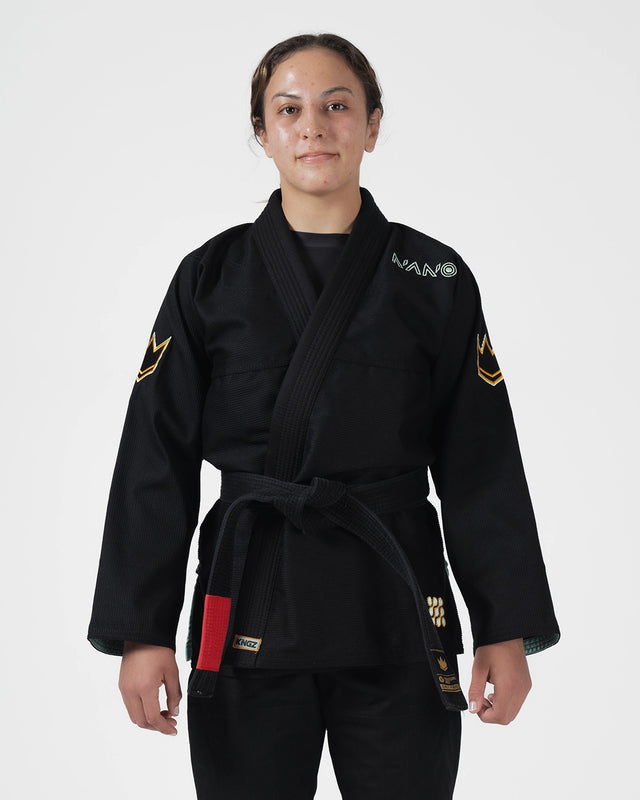
Kimono de Jiu-Jitsu Nano 3.0 Terra édition limitée
100 % approuvé IBJJF
MagasinerLe débat de l'autodéfense
Entrez dans n'importe quelle académie et cette question surgit vite, généralement avant la fin de l'échauffement. Kimono ou No-Gi pour les débutants? Il n'y a pas de réponse unique.
Beaucoup d'entraîneurs orientent les nouveaux vers le kimono d'abord, et ce n'est pas par simple tradition. Le kimono ne vous permet pas de tricher. Un mauvais positionnement colle. Ratez une sortie et vous devez composer avec, en apprenant comment la patience, les angles et le levier résolvent les problèmes bien mieux que la panique. Ce genre de discipline mène loin.
Le No-Gi, lui, semble souvent plus naturel. Surtout si vous avez fait de la lutte ou si vous préférez un rythme plus rapide. Le mouvement est constant. Votre corps devient la prise. Essayez les deux, parce que
-
Le kimono affine le contrôle et la défense
-
Le No-Gi améliore la vitesse et les transitions
Vous combattez sans la veste? Voici l'équipement No-Gi.
En résumé : ils ne sont pas en concurrence. Ils se renforcent mutuellement.
En résumé
Le débat kimono ou No-Gi ne disparaît jamais vraiment. Il fait le tour de chaque académie tôt ou tard. Mais une fois sur le tatami, le cœur qui bat vite, les manches humides et les doigts endoloris, il devient clair que ce ne sont pas des adversaires. Ils sont complémentaires.
Le kimono vous ralentit et exige de la patience, de la pression et du contrôle. Le No-Gi retire les prises et impose l'honnêteté dans votre équilibre, votre timing et votre mécanique. Des leçons différentes. Le même art.
Certains jours, vous voudrez la structure du kimono. D'autres jours, le rythme plus rapide du Rashguard et du short vous conviendra mieux. Dans un cas comme dans l'autre, le progrès ne vient pas de l'uniforme. Il vient des rounds accumulés, des erreurs répétées et de la simple habitude d'être présent.
FAQ
Qu'est-ce que le kimono au Jiu-Jitsu?
Le kimono au Jiu-Jitsu est l'uniforme traditionnel en coton qui ajoute de la friction et des prises de tissu, ralentit le rythme et met l'accent sur le contrôle, la posture et la technique.
Que signifie No-Gi?
No-Gi signifie simplement s'entraîner sans la veste et le pantalon du kimono, en misant sur le positionnement du corps, l'équilibre et le timing plutôt que sur les prises de tissu.
Quelle est la vraie différence entre le kimono et le No-Gi?
La différence entre le kimono et le No-Gi tient à la friction et au tempo : le kimono récompense la patience et le contrôle des prises, tandis que le No-Gi exige de la vitesse, du mouvement et un ajustement constant.
Un débutant devrait-il commencer en kimono ou en No-Gi?
Les deux fonctionnent : le kimono développe tôt la structure et la défense, tandis que le No-Gi semble plus intuitif et axé sur le mouvement pour beaucoup de débutants.
Le BJJ No-Gi est-il meilleur pour l'autodéfense?
Le No-Gi se transpose bien aux situations réelles où tout glisse, mais les compétences en kimono s'appliquent quand il y a des vestes ou des vêtements épais.