
Nouvelles
How to Remove Sweat Odor from Gis and Rash Guards

Sweat odor usually shows up early in a session.You pull on a clean gi, but once your body heat rises, bacteria left in the fabric reactivates. In BJJ, showing up with clean gear is a basic sign of respect for your partners.
This guide covers the essential gi washing instructions and maintenance steps to keep your jiu jitsu equipment fresh and durable.
The Science of the Stink
It’s not just dried sweat ruining your gear; it's a microscopic buildup called biofilm due to the lack of hygiene. As we train, bacteria feed on body oils and dead skin, forming a protective layer inside the fabric that standard detergents often can’t penetrate.
The type of jiu jitsu equipment you wear changes how this film develops:
-
Cotton Gis: High-density pearl weaves absorb large amounts of moisture. They soak up gallons of moisture that settle deep into reinforced seams and collars, where bacteria thrive in the damp environment.
-
Rash Guards & Spats: These synthetic blends are hydrophobic. They may shed water, but they retain body oils extremely well. Most soaps just slide over these oils without actually breaking them down.
Leaving a wet gi in a dark gym bag or a hot car trunk creates a petri dish. Without a proper deep clean, those microbes remain dormant until your body heat wakes them up mid-roll, bringing the smell right back to life.
BJJ Equipment Overview: Understanding Your Gear
Effective cleaning starts with knowing your fabrics. Your training kit generally falls into two categories, each demanding its own approach to hygiene.
The Uniform: Gis
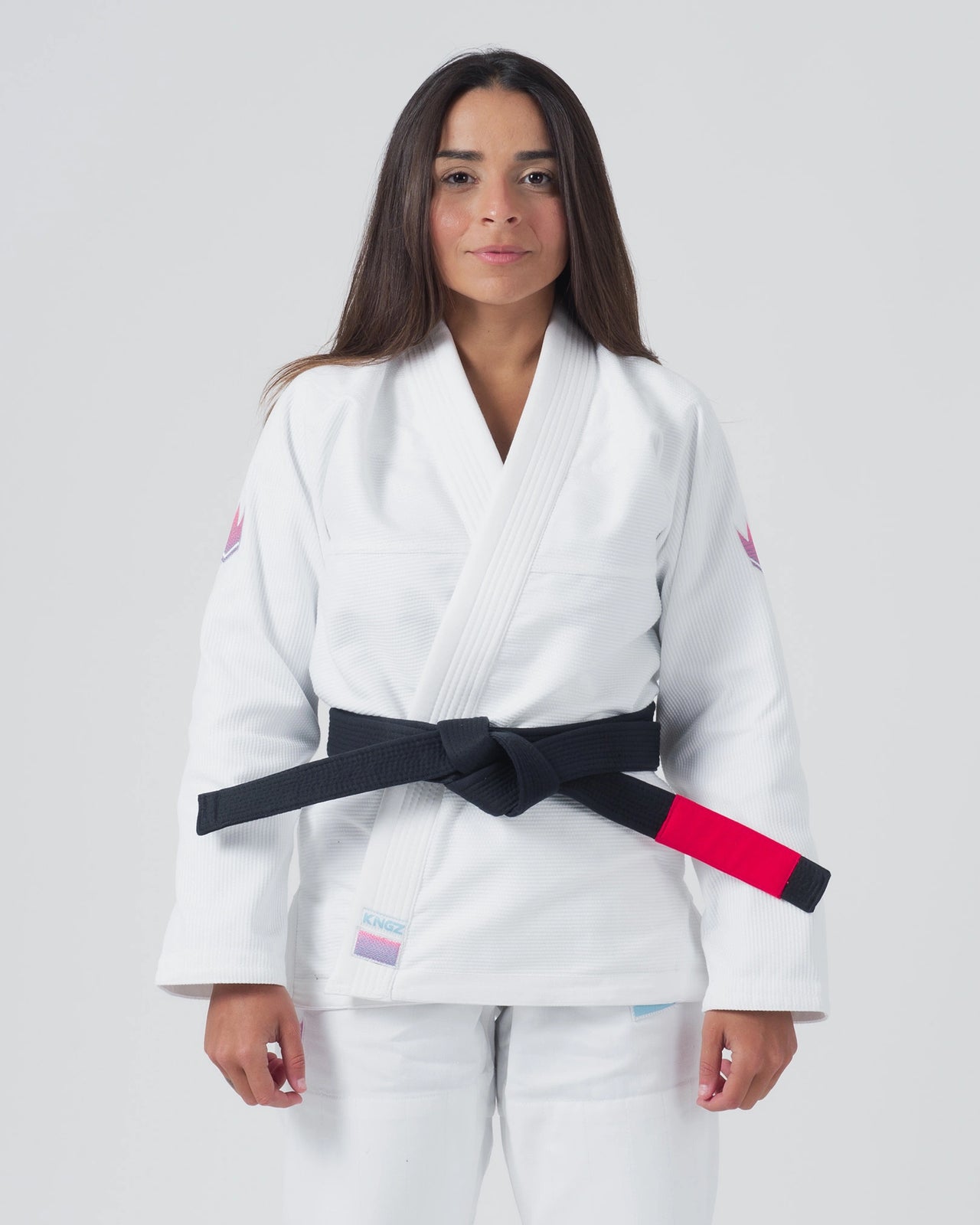
Standard gis are made from heavy-duty cotton. While built for durability and grip, the porous pearl weave acts as a net for sweat and skin cells. Cotton is also notoriously reactive to heat; a simple mistake in the laundry room can easily ruin the fit of your favorite kit.
The Base Layer: Rash Guards and Spats
This category covers your synthetic no-gi gear.
-
What are spats in BJJ? These are specialized compression leggings worn as a base layer.
-
The Function: Beyond preventing mat burn, spats act as a critical hygiene barrier between your skin and the mats, reducing the risk of staph or ringworm.
Because this jiu jitsu equipment uses polyester and spandex blends, it doesn’t breathe the same way cotton does. The tight, elastic weave is designed to wick moisture, but it also traps oils and bacteria, leading to that distinct, permanent locker-room odor if not handled correctly.
Gi Washing Instructions: The Deep Clean Protocol
If you’ve let your gear get to the point of permastink, a standard wash cycle won't save it. You need to reset the fabric. Here is the structured approach to removing odor without damaging the fabric.
1. The Immediate Rinse
Allow sweat to dry in the fabric. If you aren't running the machine the second you get home, throw your gi in the shower or a sink. Rinsing the salt and minerals out immediately stops them from setting into the reinforced seams.
2. The Vinegar Reset
For gear that’s already funky, use a pre-wash soak.
-
The Mix: One part white vinegar to four parts cold water.
-
The Timing: 30 to 60 minutes.
The acidity breaks down the body oils that standard detergents usually just slide over. It’s cheap, and it works.
3. The Machine Cycle
Always turn your gi inside out. This protects the patches and keeps the lapels from taking a beating against the drum.
-
Settings: Cold water only. High heat degrades cotton fibers.
-
The Booster: Toss half a cup of baking soda directly onto the gear.
-
A Note on Chemistry: Do not use vinegar and baking soda in the same cycle. They’ll just neutralize each other into salty water, which makes the process ineffective.
-
Skip the Softener: Fabric softeners are essentially a wax coating. They might smell nice for a minute, but they actually seal odors into the fiber.
4. The Drying Phase
Hang your gi. Avoid the dryer unless you're intentionally trying to shrink it. If you can hang it in the sun, do it. UV rays are a natural disinfectant that helps finish off any lingering microbes.
Specialized Care for Rash Guards and Spats
Synthetic compression gear presents a different challenge than your cotton gi. Rash guards and spats in BJJ have a very tight weave, which traps skin oils. Standard detergents often wash over the surface without actually penetrating the pores of the fabric.
To keep your no-gi kit from becoming a persistent odor, adjust your approach:
-
Use a Mesh Bag: This protects rash guards from stretching and pilling on lapels or Velcro.
-
Target the Oils: Use an enzyme-based sport detergent. These are specifically formulated to break down the organic matter (sweat and oils) that bonds to synthetic fibers.
-
The Rotate Rule: Synthetic fabrics degrade faster when they stay damp. Never wear a rash guard two days in a row. A three-piece rotation ensures each item is bone-dry and the fibers have fully dried and recovered before the next session.
-
Wash Inside Out: Most bacteria sit on the inside of the garment, directly against your skin. Turning them inside out ensures the water and soap hit the source of the odor.

Related Maintenance: How to Shrink a Gi
Sometimes the issue isn’t the smell, but the fit. A gi that is too baggy isn't just a disadvantage in a roll; the excess fabric creates more surface area to trap sweat and bacteria. If you find yourself swimming in your sleeves, you can use heat strategically to customize the fit.
The Controlled Shrink Method
Unlike your standard gi washing instructions, this process requires heat.
-
The Wash: Run your gi through a warm or hot water cycle. This relaxes the cotton fibers, allowing them to contract.
-
The Dryer: Put the gi in the dryer on a medium-heat setting.
-
The 10-Minute Check: This is crucial. Every 10 minutes, take the gi out and try it on. Once the sleeves hit just above your wrist bone, stop immediately.
A Word of Caution
Cotton continues to shrink as long as heat is applied. Once you’ve reached the desired size, return to the cold-wash and hang-dry method. This locks in the current fit and ensures you don't end up with sleeves that no longer meet IBJJF standards.
Proactive Prevention & Gear Longevity
The best way to handle a permastink is to never let it settle in the first place. Washing your gear regularly matters just as much as showing up to train.
-
The Gym Bag Rule: Never leave your gear zipped up in a bag overnight. If you can’t wash it immediately, use a breathable mesh bag or hang it up to let the sweat evaporate.
-
The "3-Gi Rotation": If you train three or more times per week, having at least three gis allows for a full drying cycle. This ensures every piece of jiu jitsu equipment is completely dry before it’s exposed to more friction and sweat. If you only train once or twice weekly, using the same gi can still work—as long as it’s washed and fully dried after every session.
-
Antimicrobial Sprays: For days when you're jumping from the morning session to work, use a specialized antimicrobial fabric spray. It’s a temporary fix that inhibits bacterial growth until you can get to a washing machine.
Bottom Line
Taking care of your gear is a quiet extension of the discipline you practice during live rounds. Following proper gi washing instructions and understanding the specific needs of spats BJJ and rash guards keeps you healthy and your training partners safe.
Consistent maintenance doesn't just save you money by extending the life of your kit; it shows respect for the sport and the people you share the mats with. Keep your gear clean, stay focused on the roll, and remove distractions that don’t belong on the mat.
FAQs
How often should I wash my gi and rash guards?
After every single session. Never reuse gear without washing, as bacteria multiply the moment you step off the mat.
Can I use bleach to keep my white gi bright?
No. Bleach weakens cotton fibers and causes fraying; use a vinegar soak or specialized whitener instead.
Why does my rash guard still smell even after a wash?
Body oils are trapped in the synthetic weave. Use an enzyme-based detergent to break down this stubborn biofilm.
Will my gi shrink if I wash it in cold water?
Cold water minimizes shrinkage, but the dryer is the real culprit. Always hang dry to lock in your preferred fit.
Should I wash my BJJ belt?
Yes. Belts collect the same bacteria as your gi. Wash yours regularly in a mesh bag to maintain hygiene and safety.