
News
Best Cardio Training for BJJ Athletes

A heavy cross-face is difficult to handle on a good day. It is nearly impossible when your lungs are betraying you. Most of us have felt that mid-round fog, where the mind knows exactly how to escape, but the body simply won't fire. Solving this requires more than just logging miles; it takes a specific kind of engine.
Below, we’ll look at how to build that gas tank through targeted energy system work, the best cardio for BJJ, and a schedule that keeps you on the mats rather than the sidelines.
The Science of the Scramble
BJJ isn’t just cardio. It isn’t just sprints. It’s not a 10K. It’s not a 100-meter dash either. It’s both, stacked on top of each other, layered, messy.
A standard six-minute round is largely aerobic. Meaning:
-
Your heart and lungs are supplying steady oxygen
-
You’re managing pace, grip tension, posture
-
You’re making decisions while moving
But inside that steady effort are violent little storms. A five-second guard pass attempt. A bridge-and-roll escape. A submission chain where you commit fully.
Those bursts are anaerobic. They spike your heart rate fast. And they create that burning, acidic fatigue in your forearms and hips.
So when people ask about the best cardio for BJJ, the real answer starts here: you need both systems trained. Not one. Not whatever feels hard.
Cardio for jiu jitsu isn’t just about not getting tired. It’s about how quickly you can calm the chaos.
Between rounds, you usually get 60 seconds. Maybe less in competition. If your heart rate is sitting at 185 and you can only bring it down to 175 before the next round starts, you’re stacking fatigue. But if you can drop it 20 - 30 beats in that minute? You reset.
That’s conditioning.
Now, let’s address the common belief: Rolling is enough.
Rolling is essential. It teaches pacing. It exposes weaknesses. It builds toughness. But it’s unpredictable. One round might be flowy and technical; the next feels like a bar fight in a phone booth. That chaos makes it hard to build a true aerobic base consistently.
External conditioning is a supplement to your mat time. Not a replacement. It is some sort of a support system.
Controlled cardio sessions, where intensity is intentional, allow you to:
-
Build heart efficiency
-
Improve oxygen delivery
-
Practice controlled breathing under stress
-
Recover faster between hard exchanges
Pro tip: If you’re new to concepts like aerobic base or anaerobic bursts, understanding these common BJJ terms helps a lot, since many of them show up daily in training.
Building the Engine: LISS vs. HIIT
Gassing out is rarely about a lack of effort; it's usually a lack of structure. Most grapplers try to solve heavy lungs by simply red-lining every session, but building a real gas tank requires two distinct gears:
-
LISS (The Base): Think of this as your engine’s foundation. It’s 30 - 45 minutes of steady, Zone 2 movement where you can still breathe through your nose. It increases heart stroke volume and helps you recover between rounds without frying your nervous system. You can't build a skyscraper on a thin slab of concrete.
-
HIIT (The Edge): This mimics the scramble-reset rhythm of a match. Short, explosive bursts (20 - 30 seconds) followed by active recovery. It trains your brain to keep functioning while your muscles are screaming.
The Strategy:
-
Beginners: Prioritize LISS. Build the aerobic floor before you try to raise the ceiling.
-
Competitors: Use HIIT sparingly to peak, but keep the LISS to stay fresh.
True conditioning isn't about out-suffering your partners; it’s about building a system that lets your technique actually work in the final minute.
Just like BJJ belts, conditioning develops gradually and rewards consistency.

The Top 5 Cardio Tools for Grapplers
Not every workout that makes you sweat helps your jiu jitsu. Doing a million burpees might make you tired, but it won't necessarily help you finish a double-leg in the third round.
You want tools that build mat strength without leaving your joints feeling like glass.
-
The Fan Bike (Assault/Echo): There is a reason every high-level gym has one. It’s a total-body push-pull nightmare. It forces your arms and legs to coordinate under heavy fatigue, exactly what happens when you’re fighting for a sweep. It’s low impact, which is a gift for your knees.
-
The Rower: If you play a lot of guard, get on a rower. It targets your hamstrings, glutes, and back. It builds that staying power you need to keep a heavy person broken down in your closed guard without your muscles seizing up.
-
Swimming: This is the secret weapon for composure. Being underwater forces you to manage your breath. It’s the closest thing to the suffocating feeling of being stuck under a heavy side control. It teaches you to stay calm when oxygen is the limiting factor.
-
Hill Sprints: Running on flat ground can be a recipe for shin splints and sore ankles. Moving your sprints to a steep hill protects your joints and builds massive explosive power for your takedowns.
-
Jump Rope: Don't sleep on this. It builds bounce in your feet and calf endurance. If you find your legs getting heavy during stand-up rounds, three rounds of skipping will fix that faster than anything else.
A Quick Cheat Sheet
|
The Tool |
Why it works for BJJ |
The Best Use |
|
Fan Bike |
Mimics the total-body scramble. |
6-minute intervals (match length). |
|
Rower |
Builds pulling and posture strength. |
500m sprints or steady 20-min pulls. |
|
Swimming |
Trains the "don't panic" reflex. |
Laps with focused nasal breathing. |
|
Hills |
Takedown drive and explosiveness. |
10-second sprints, slow walk down. |
|
Jump Rope |
Footwork and lighter movement. |
Between rounds or as a warm-up. |
Pro tip: If you're hitting these sessions on top of regular BJJ, your body is going to scream for salt. Most cardio issues are actually just dehydration or electrolyte crashes. Keep your fluids up so your engine doesn't seize before you even get to class.
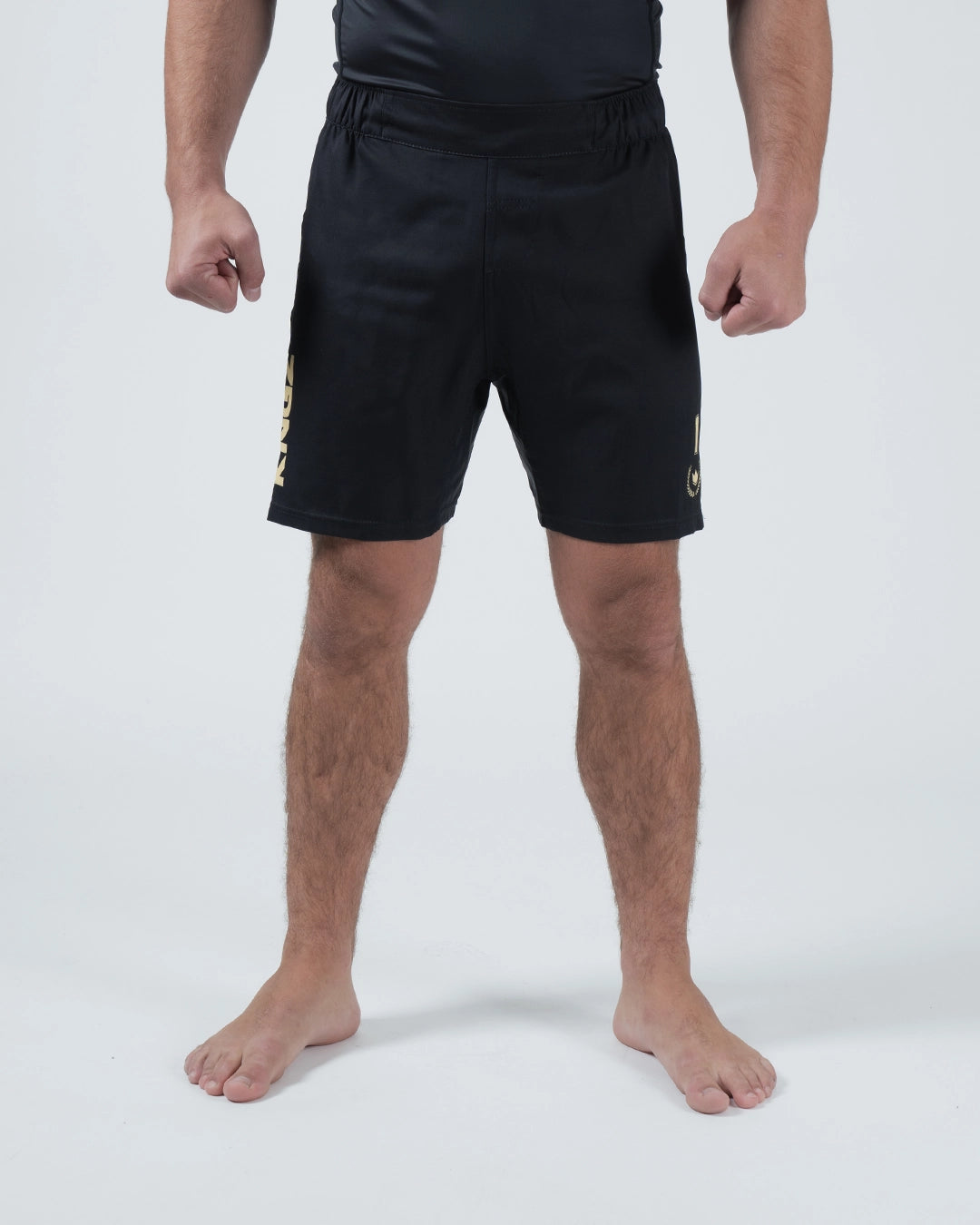
Hydration, sleep, and even simple factors like wearing proper BJJ shorts can influence how well your body handles repeated hard rounds.
Integrating Cardio Without Overtraining
It’s tempting, especially after a hard round where you felt outpaced, to stack conditioning on top of everything else. Morning run. Evening class. Extra intervals just in case. For a week or two, you might feel productive. Then the small signals show up, heavy legs during drilling, slower reactions, irritated elbows.
Conditioning should support your jiu-jitsu. Not compete with it. Structuring your week intentionally is part of learning how to study jiu jitsu.
Here are a few practical guardrails.
|
Rule |
What to Do |
Why |
|
No HIIT before BJJ |
Do HIIT after BJJ or on another day |
Training tired hurts technique, reaction time, and learning |
|
Split sessions (if possible) |
6+ hours between cardio and BJJ |
Better recovery, sharper rolls |
|
If no split |
LISS after drilling daysHIIT 6–8 min maxSkip conditioning on deload weeks |
Manage fatigue |
|
Nasal Test (LISS) |
If you can’t breathe through your nose, slow down |
Stay in base-building zone |
|
Simple Week |
3x BJJ1x LISS1x short HIIT1–2 rest/light days |
Consistency > intensity |
The best cardio for BJJ fits around your training, not on top of it. If your rolls feel sharper, your breathing steadier, and your recovery faster between rounds, you’re on the right track.
Bottom Line
Technique is king. But if you’re exhausted, it doesn’t help much.
The best cardio for BJJ isn’t about destroying yourself. It’s about being able to move, think, and make decisions when you’re tired.
For most people, good cardio for jiu jitsu starts with a solid aerobic base, easy runs, bike rides, and swims, then a small dose of hard efforts layered in. Nothing extreme. Just enough to handle tough rounds without falling apart.
Stay consistent. Recover well. Show up fresh enough to train hard.
FAQs
What is the best way for a BJJ beginner to start cardio training?
Start with 30 minutes of low-impact, steady movement like cycling twice a week. Building an aerobic base first makes live rounds manageable and prevents burnout.
Is running an effective way to build cardio specifically for jiu jitsu?
It is, but be mindful of your joints. Keep runs easy and conversational. If your knees are sore from wrestling, swap the pavement for a rower or bike to stay healthy and mobile.
How should I balance extra cardio sessions with three days of BJJ training?
Two supplemental sessions are usually enough. Aim for one long, steady effort for recovery and one short, intense burst for scrambles.
Is rolling more often enough, or do I need separate cardio for jiu jitsu?
Rolling is great, but its intensity depends on your partner. Structured cardio lets you isolate your heart rate and force the specific physiological changes that rolling alone doesn’t always provide.
How long does it take to see noticeable improvements in BJJ conditioning?
You will likely feel your recovery between rounds improve within four weeks. True conditioning is a slow build; stay consistent, and that "heavy lung" feeling usually starts to lift by week six.