
News
How Jiu-Jitsu Helps Kids Build Confidence

Confidence in kids doesn’t usually show up with cheers. It grows slowly, from messing up, trying again, and learning to stay calm when things get tricky. Brazilian jiu jitsu gives them a place to do that.
Below, we’ll look at how a simple jiu jitsu curriculum helps kids feel steadier, handle pressure, and pick up skills that carry beyond the mat.
What Is Confidence and Why Does It Matter for Kids?
When you hear ‘confidence,’ you probably picture the kids who jump right in. The talkers. But that’s not usually what confidence looks like day to day.
More often, it’s quiet. A kid who keeps trying after messing up. One who sticks with something hard instead of asking to quit halfway through.
Kids today deal with a lot. Social pressure starts earlier. Screens don’t help. When confidence slips, it doesn’t always look dramatic. Sometimes it’s just avoidance. Or maybe frustration. The result is a kid who suddenly doesn’t want to try.
Jiu jitsu handles this differently than most activities. There’s no scoreboard. Progress is slow, personal, and earned through repetition.
A solid jiu jitsu curriculum helps kids learn to:
-
Stay in uncomfortable situations without panicking
-
Think while tired or frustrated
-
Make mistakes and keep going
-
Rely on effort, not attention or natural talent
Because BJJ is individual, kids can’t hide behind a team, or be defined by it. They move forward at their own pace. That tends to work well for a wide range of kids, whether they’re quiet, intense, cautious, or still figuring themselves out.
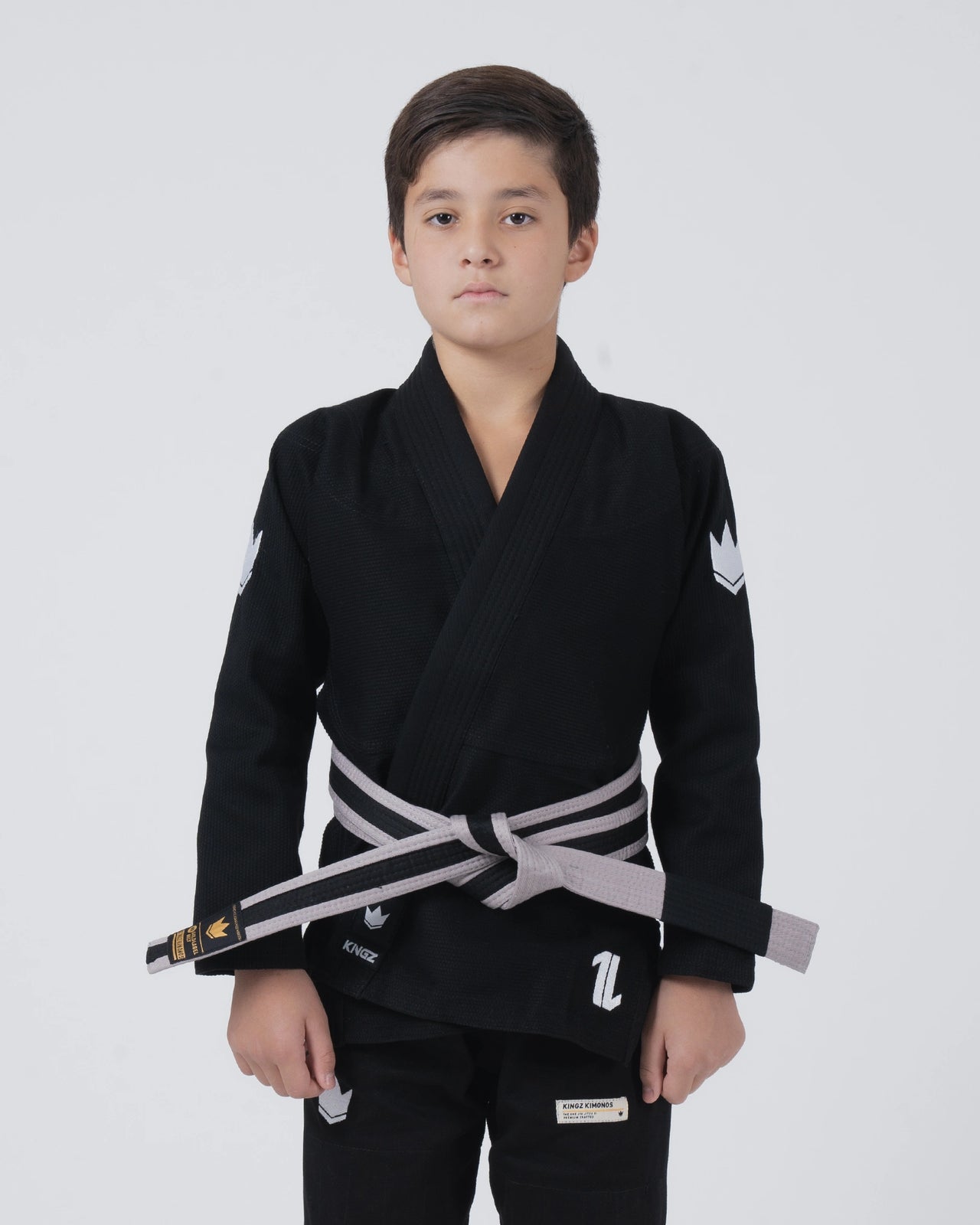
The Structured Jiu Jitsu Curriculum: A Foundation for Confidence
One thing people often miss about kids’ jiu jitsu is the structure. Kids pick up on it right away, even if they can’t explain why it feels safer.
A good jiu jitsu curriculum doesn’t toss techniques at random. It stacks them, step by step. First: safety and awareness. Basic movement comes next, and we have problem-solving. Every class builds on the one before, whether a kid notices it or not.
Early wins help. Things that seem small make a big difference:
-
Escaping bad positions
-
Learning control and balance
-
Knowing when to pause, breathe, and reset
These moments matter. A kid who figures out how to stay calm when pinned isn’t just “doing the move.” They’re learning trust in themselves. No one had to say good job; they feel it works.
Progress is visible, too. Stripes and belts aren’t random. They’re earned. Getting a stripe after weeks of drilling sends a simple, quiet message: showing up matters.
Practice itself keeps reinforcing confidence:
-
Drills make movement familiar and less scary
-
Controlled sparring adds pressure, but safely
-
Repetition turns unsure moments into instinct
Even at white belt, kids pick up simple escapes and submissions early. It’s not about “winning.” It’s about cause and effect. Try. Adjust. Stay patient. Do it again. Those tiny victories add up. Slowly, but surely, confidence does too.
Pro tip: Having the right gear helps kids feel comfortable while learning, like choosing top kids’ BJJ gis that fit well and let them move freely.
Does Jiu Jitsu Help with Anxiety? Addressing Emotional Challenges
Short answer: yes. And sometimes, it surprises parents how much.
Anxiety in kids isn’t always obvious. Not panic, not tears. Sometimes it’s stomach aches before school. Sometimes they freeze when plans change. Or they avoid things that feel unfamiliar. Perfectionism shows up in small, sneaky ways. BJJ meets these moments, gently, but directly.
Classes put kids in situations that feel tricky, positions that feel awkward or uncomfortable. Then they’re guided to breathe, think, and figure out how to move through it. Little by little, that process changes how stress feels in the body.
What’s actually happening on the mat?
-
Movement helps calm the nervous system: Kids burn off anxious energy doing something focused. They leave tired, yes, but calmer too.
-
Breathing becomes a tool, not a lecture: During rolls, kids quickly learn that holding their breath doesn’t help. Slowing down does. That skill sticks, at home or school.
-
Exposure makes fear familiar: Being pinned, stuck, or off-balance feels scary at first. Repetition makes it normal. Familiarity reduces panic.
The environment is important, too. Rules are clear. Coaches guide without taking away the challenge. That combination, structure plus support, can be grounding, especially for kids with anxiety, ADHD, or sensory sensitivities.
The best part: The confidence carries beyond the gym. Kids notice it in school presentations. In group projects. Even in social situations where they used to freeze. They start to realize: stress isn’t danger; it’s something they can handle.

Physical and Social Benefits That Enhance Self-Esteem
It is a fact that confidence isn’t just in kids’ heads. The body speaks first. You see it before a kid can even say it. Shoulders back. Chin up. You can see less hesitation. And even details, like standing taller at lunch instead of slouching.
BJJ hits that. Kids realize they can move, they can control themselves. And they notice it. Slowly. Not all at once.
Physically, the changes show up fast:
-
Stronger. Just from moving themselves around, nothing fancy.
-
Better balance. They stumble less, trip less, feel steadier.
-
Flexible. Can twist, stretch, fall, and get back up without freaking out.
It’s subtle. But you see it. A kid who learns to base, frame, and move carefully; they start walking differently. Even when no one’s watching.
Socially, BJJ is different. Kids pair up. Swap roles constantly. Attacker, defender, helper, learner. No yelling. Just doing the assignment. And they pick up respect, patience, teamwork along the way.
Examples:
-
Taking turns, even when they’d rather rush.
-
Talking clearly to partners (sometimes harder than the moves themselves).
-
Showing restraint, even if they win a drill.
There’s also the other side: knowing they can handle themselves. Anti-bullying lessons aren’t about fighting. They’re about awareness, keeping distance, staying calm. Kids learn, they don’t need to be aggressive. That knowledge changes the way they move through the world.
And it adapts. For little kids, classes use games and movement drills. Older kids focus more on technique and strategy. Everyone at their own pace. No rush. Step by step. A kid who was unsure is now capable. That confidence sticks, bit by bit.
Bottom Line
Confidence in jiu jitsu isn’t something that happens overnight. It is built slowly, step by step. You can see it in details like calmer breathing and steadier reactions.
A good jiu jitsu curriculum teaches kids moves and techniques; more importantly, it gives them a way to handle challenges and stay patient. You will notice it off the mats, how a child speaks up in class, recovers from mistakes, or handles stress. Habits like focus, patience, and trusting themselves stick. Slowly, kids start feeling steadier and more confident.
FAQs
At what age can kids start Brazilian jiu jitsu?
Usually around four to six, but it depends on the child. At this age, it’s mostly about moving, listening, and learning their own body. No complex moves or sparring yet.
Is jiu jitsu safe for kids?
Yes, when coaches know what they’re doing. Kids are paired carefully, rules are clear, and the focus is on safety, not winning. Injuries are uncommon.
Does jiu jitsu help shy kids?
Definitely. Shy kids can go at their own pace. Small wins, finishing a drill, landing a move, build trust in themselves over time.
How long before I see changes?
Some kids show small changes in weeks, calmer, more focused, willing to try again. Real, steady confidence takes months of practice and consistency.
How is a kids’ curriculum different from adult classes?
It’s simpler, slower, shorter. Focus is on patience, respect, and self-control. Moves are easier. The goal isn’t keeping up with adults; it’s learning and improving at their own pace.