
News
How to Size a BJJ Gi Correctly

Knowing how to size a gi correctly rarely happens by accident. Too tight, and every grip exchange feels restricted. Too loose, and your opponent gets easy handles you never meant to offer.
Below, we’ll review how to size a gi using the metrics that matter most, along with a clear breakdown of sizing codes, bridge sizes, and weave shrinkage.
What Size Gi Am I? Decoding the BJJ Sizing Alphabet
At first glance, answering “what size gi am I?” may look simple. A number and a letter. Done. Not that simple, really. Anyone who’s worn the wrong size for six months knows.
That code is shorthand for how the gi will sit on your shoulders, fall past your wrists, and move when someone’s trying to fold you in half.
The “A” or Adult Standard (A0 - A6): This is the baseline scale most practitioners fall into. Options in men's kimonos provide a range of fits tailored to these standard adult sizes for broader shoulders and builds.
The higher the number, the more room you get everywhere, chest, sleeves, pants, all of it.
-
A0 - A1: Smaller frames. Lighter practitioners. Cleaner, tighter cuts.
-
A2: The middle ground. By far the most common size on the mat.
-
A3 - A4: Broader builds or taller athletes who need more reach and space.
-
A5 - A6: Reserved for larger frames. Longer limbs, wider shoulders, heavier torsos.
Most sizing charts begin here. But real bodies don’t always fit neat categories.
The Specialists, L & H Variants: This is where sizing gets more precise and more useful.
-
L (Long): Same torso width as the base size, but longer sleeves and pants. Built for tall, lean frames. Think long arms, narrow shoulders.
-
H (Husky): Adds width through the chest, shoulders, and lapel wrap without excessively long pant legs. Better for broader, thicker builds.
For example, an A2L fits someone tall and slim. An A2H fits someone shorter but heavier through the torso. Same base size. Different geometry.
The Rise of Bridge Sizes (A1.5, A2.5): These in-between sizes exist for a reason. Not everyone lives cleanly between A1 and A2. Bridge sizes close that gap.
-
Cleaner sleeve breaks
-
Better lapel overlap
-
Less post-wash guesswork
They’re especially useful now, as competition fits leave less margin for error.
Gender and Youth Prefixes: Prefixes adjust proportions, not quality.
-
F: Designed with narrower shoulders and a more tapered waist
-
M, Y, K: Youth sizing, scaled for younger practitioners without excess bulk
Younger athletes often progress over years, and knowing how long it takes to get a black belt in BJJ can guide sizing choices for long-term growth.
A gi should follow your structure, not force you into someone else’s template.

How to Size a Gi: The "Competition-Ready" Method
Sizing charts get you close. Measurement gets you right. The difference shows up in small places, the sleeve breaks at your wrist, the way the lapel overlaps, whether your pants stay put when someone starts pulling on them.
Three metrics matter most.
1. Weight (The Anchor)
This comes first. Always.
Weight determines how the jacket wraps across your torso. Too small, and the lapels barely overlap, suddenly, your collar is easier to manipulate. Too large, and excess fabric becomes a liability.
-
Proper wrap creates a clean overlap without bunching
-
Excess fabric gives opponents stronger grips
-
Too tight restricts shoulder rotation and breathing
If you’re between sizes, follow your weight before your height. The jacket is the core of the system.
2. Height (The Hem Guide)
Height fine-tunes sleeve and pant length. Nothing more, nothing less.
-
Sleeves should end near the wrist bone when arms extend forward
-
Pants should rest just above the ankle without riding up during movement
-
Too short risks failing competition checks
-
Too long invites grip control and entanglement
3. Wingspan
This one surprises people. Arm length varies wildly, even among athletes with identical height. A longer wingspan often means standard sleeves come up short.
That’s where L sizes or bridge sizes matter. A proper sleeve length protects you during formal inspection and, more importantly, during live rounds.
The Shrinkage Reality Check
Not all gis behave the same after washing.
-
Pearl weave: Expect 3 - 5% shrinkage. The standard balance of durability and mobility.
-
Gold weave: Can shrink up to 10%. Heavier. More rigid.
-
Ripstop: Minimal shrinkage, usually 1 - 2%. Holds its original dimensions reliably.
Even pre-shrunk gis aren’t immune. Heat changes cotton. Cold water and air drying help preserve the original cut. Rush that process, and the fit you carefully chose slowly disappears.
The 2026 Gi Size Table & The "Tie-Breaker"
Sizing charts are starting points. Not verdicts. They give you a working range, but how the gi feels during live rounds matters just as much as what the numbers say.
|
Size |
Height |
Weight |
Best For |
|
A0 |
5'0"–5'4" |
110–140 lbs |
Petite / Slim |
|
A1 |
5'4"–5'8" |
140–165 lbs |
Athletic / Slim |
|
A1L |
5'8"–6'0" |
140–165 lbs |
Tall / Lean |
|
A2 |
5'7"–5'11" |
165–190 lbs |
Standard Build |
|
A2H |
5'6"–5'10" |
190–220 lbs |
Broad / Stocky |
|
A3 |
5'9"–6'2" |
190–225 lbs |
Large / Tall |
|
A3L |
6'0"–6'3" |
190–225 lbs |
Extra Tall |
|
A4 |
6'1"–6'4" |
225–250 lbs |
Heavyweight |
|
A5 |
6'3"–6'7" |
250–280 lbs |
Super Heavy |
|
A6 |
6'5"+ |
280+ lbs |
Ultra Heavy |
Still, real bodies live between categories. That’s where decision-making shifts from chart to intent.
Use your game style as the tie-breaker. If you pressure pass and stay on top, consider sizing down.
-
Less loose fabric for opponents to grip
-
Cleaner sleeve and pant profile
-
Reduced drag during movement
If you play guard, invert, or move dynamically, consider sizing up.
-
More freedom through hips and shoulders
-
Less restriction during inversion and retention
-
Better comfort in extended scrambles
Mobility matters more than minimalism here. Positions that involve twisting the opponent's arm, such as the BJJ Kimura, benefit from extra space to maintain control without fabric restrictions.
Technical Fit: IBJJF Compliance
On competition day, fit isn’t subjective. It’s measured. Under current standards set by the International Brazilian Jiu Jitsu Federation, small deviations can mean delays, or disqualification before your first match.
The “2 cm” Rule
With arms extended forward and legs straight:
-
Jacket sleeves must end no more than 2 cm from the wrist bone
-
Pant legs must fall within 2 cm of the ankle
Too short, and you fail inspection. Too long, and excess fabric becomes a gripping advantage.
And one more thing: The gi jacket must extend to the athlete’s thigh to ensure proper coverage.
The Cuff Test (Opening Width)
Officials check sleeve and pant openings to ensure legal gripping space.
-
When flattened, the sleeve opening must measure at least 7 cm
-
The common field check: four fingers should fit inside the cuff
If the cuff is too narrow, it restricts standard grips. Too wide, and it risks being flagged for excess material.
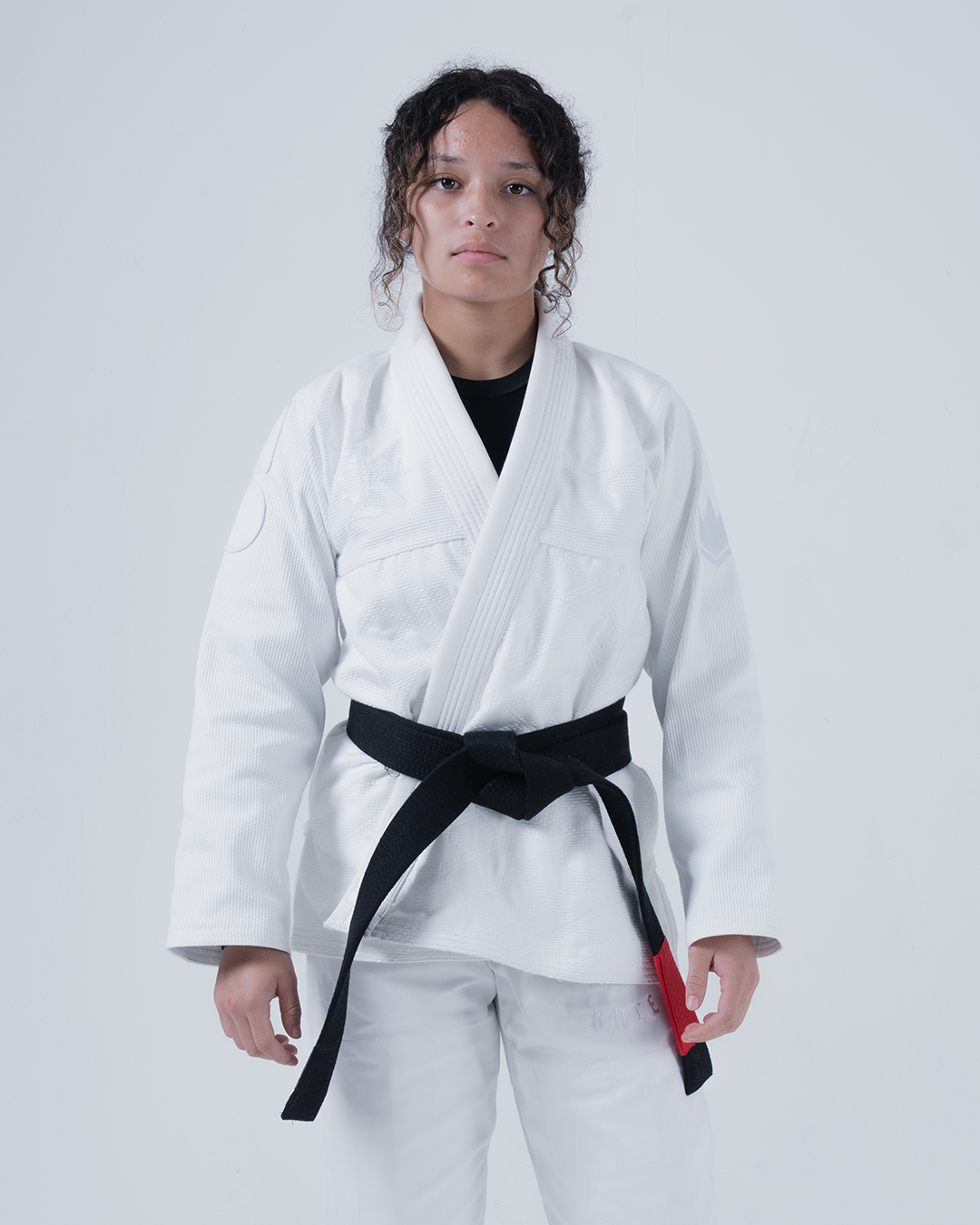
Born to Rule Women's Jiu Jitsu Gi - White
Reinforced Stitching across Stress Points
Shop NowLapel Specifications
Post-2024 regulations tightened collar construction:
-
Maximum thickness: 1.3 cm
-
Maximum width: 5 cm
Overly stiff or thick lapels are not permitted.
Patch Placement
Keep lower sleeves and pant hems clear, generally the bottom 15 to 20 cm. Gi-check tools need unobstructed fabric to measure accurately.
Pro tip: Pairing your gi with accessories like patches can enhance fit and compliance during inspections.
Bottom Line
Knowing how to size a gi isn’t guesswork. Start with weight. It determines the foundation. Use height and wingspan to refine sleeve and pant length. Then factor in shrinkage, because cotton always changes a little after real use.
One truth holds: you can shrink a slightly large gi, but you can’t reverse one that’s too small. For the first few washes, stay disciplined. Cold water. Hang dry. Let the fabric settle naturally.
A properly sized gi becomes part of your movement, reliable, consistent, and ready for every round ahead.
FAQs
What size gi am I if I’m between two sizes?
Follow your weight first. If you’re lighter for your height, consider L variants. If heavier or broader, H or bridge sizes usually provide a more accurate, competition-safe fit.
Should a gi feel tight or loose when new?
It should feel close but not restrictive. Expect slight shrinkage after washing. Sleeves and pants should sit near wrists and ankles without limiting shoulder or hip movement.
How much will a BJJ gi shrink?
Most pearl weave gis shrink about 3 to 5% with heat exposure. Cold washing and air drying minimize changes and help maintain the intended fit long term.
Is it better to size up or size down?
If unsure, sizing up is safer. You can shrink a slightly large gi. A gi that’s too small will remain restrictive and may fail competition measurement standards.
Do different gi brands fit differently?
Yes. Cut, weave, and manufacturing tolerances vary slightly. Always compare your measurements to the specific brand’s size chart instead of relying only on your usual size.