
News
How to Learn Jiu-Jitsu at Home (Safely)

Training Brazilian jiu jitsu without a gym or partner can feel challenging, but you can learn jiu jitsu at home safely and effectively. While nothing replaces live sparring, BJJ solo drills allow you to build mobility, refine technique, and strengthen core movements that carry directly to the mats.
Below, we will discuss jiu jitsu training at home, how to create a safe environment, and strategies to track your improvement, so every session leaves you more prepared, fluid, and confident for partner work.
Laying the Foundation: Safety and Mindset First
Before you think about drilling, shrimping or shadow grappling, it’s crucial to set the stage, literally. Learning jiu jitsu at home is rewarding, but it comes with unique challenges.
Without a coach to adjust your posture or a partner to test your skills in a real situation, mistakes can quickly lead to injury. For solo practice, safety comes first. The right mindset comes next.
The Golden Rule of Home Training
BJJ drills at home shouldn’t be used for testing risky submissions or attempting uncoached throws. The goal here is to build muscle memory, improving mobility, and reinforcing movements you already understand.
Think of it as laying bricks for a house: the stronger your foundation, the more complex techniques you can safely stack on top later. Moving too fast or trying advanced techniques without guidance usually doesn’t end well.
Creating a Safe Training Space
Your environment matters a lot when learning jiu jitsu at home. Even a small bump against a coffee table can undo a week of progress.
Clear a dedicated area with enough room to roll and move freely. Buy puzzle mats or proper grappling mats. Carpet, rugs, or hardwood floors are poor choices and increase risk of injury. Use a well-lit, ventilated space and clear out anything that could break.
Essential Safety Guidelines
-
Warm up thoroughly: Cold muscles are prone to strain, and skipping warm-ups is an easy way to compromise your practice.
-
Focus on control, not speed: Precision in shrimping, bridging, and technical stand-ups matters more than fast repetitions.
-
Know your limits: Avoid high-impact movements like uncontrolled breakfalls, and stop if you feel sharp pain.
-
Hydrate and rest: Pay attention to how your body feels, even in short sessions. Training while tired or dehydrated means higher risk of injury.
-
Don’t forget the gear: Wearing a fitted rashguard during home sessions can also help reduce skin irritation and keep movements comfortable during high-repetition drills.
Home Training Safety Checklist
|
Category |
Do's |
Don'ts |
|
Environment |
Clear space, use mats, ventilated area |
Train near furniture or hard floors |
|
Execution |
Warm up 10 - 15 min, controlled movements |
Rush drills, attempt advanced throws alone |
|
Mindset |
Set goals, focus on precision, track progress |
Ignore pain, overtrain, rely solely on YouTube for guidance |
You need three things when trying jiu jitsu training at home: discipline, awareness, and respect for your own limits. This way, every solo session becomes productive.
Without safety, progress doesn’t last. A smart mindset plus a carefully prepared space ensures that the foundation you build with BJJ solo drills is solid, sustainable, and ready to support everything that comes next.
The BJJ Solo Drills Toolkit
With your space and mindset in place, it’s time to start moving. BJJ solo drills are the backbone of home practice. They help you learn jiu jitsu at home by building mobility, balance, and muscle memory, preparing you for smoother transitions and stronger technique when you return to partner work.
Why Solo Drills Matter
-
Build the fundamental movement vocabulary of BJJ: hip mobility, base, posture, and fluid transitions.
-
Help your body react faster and more naturally under pressure.
-
Improve conditioning and body awareness without risking injury.
Ground Movement Essentials
-
Shrimping / Hip Escapes
-
Cornerstone of guard retention and escapes.
-
Practice two-legged and single-leg variations, moving both forward and backward.
-
Focus on keeping shoulders and hips aligned; precision over speed.
-
Bridging ("Upa")
-
Creates space from bottom positions and strengthens your posterior chain.
-
Directional bridges: over left shoulder, right shoulder, and straight back.
-
Technical Stand-Ups
-
Safely rise from the ground while maintaining balance.
-
Step back with one foot, post on opposite hand, keep posture tall.
-
Alternate sides to build symmetry and core stability.
Guard & Mobility Drills
-
Hip Heists / Seated Guard Movements
-
Develop distance management and control in open guard.
-
Move laterally while maintaining seated posture; exaggerate hip motion.
-
Granby Rolls & Shoulder Rolls
-
Advanced mobility drill for guard recovery and flow transitions.
-
Practice slowly at first; focus on smooth, controlled rolls.
-
Only attempt if you are confident in basic rolling mechanics.
Standing & Takedown Fundamentals
-
Penetration Steps & Shot Drills
-
Practice level changes and proper stance without a partner.
-
Focus on fluidity, keeping posture low and knees bent.
-
Sprawls
-
Essential for takedown defense and overall conditioning.
-
Emphasize hip placement and foot positioning; control descent to the floor.
-
Shadow Grappling
-
Combine footwork, sprawls, and takedown motions in sequence.
-
Visualize a resisting partner to simulate real scenarios.
-
Helps integrate individual drills into fluid movement patterns.
Pro Tips for Effective BJJ Solo Drills
-
Start each drill slowly to learn the movement correctly.
-
Perform 10 - 20 repetitions and increase only when your technique feels solid.
-
Add resistance bands to build strength in bridges.
-
If available, use a grappling dummy for basic position and guard-passing drills. Make sure to perform repetitions on both sides to maintain balanced movement.
With consistent practice of these foundational drills, your solo sessions become a bridge between home practice and real-world mat performance.
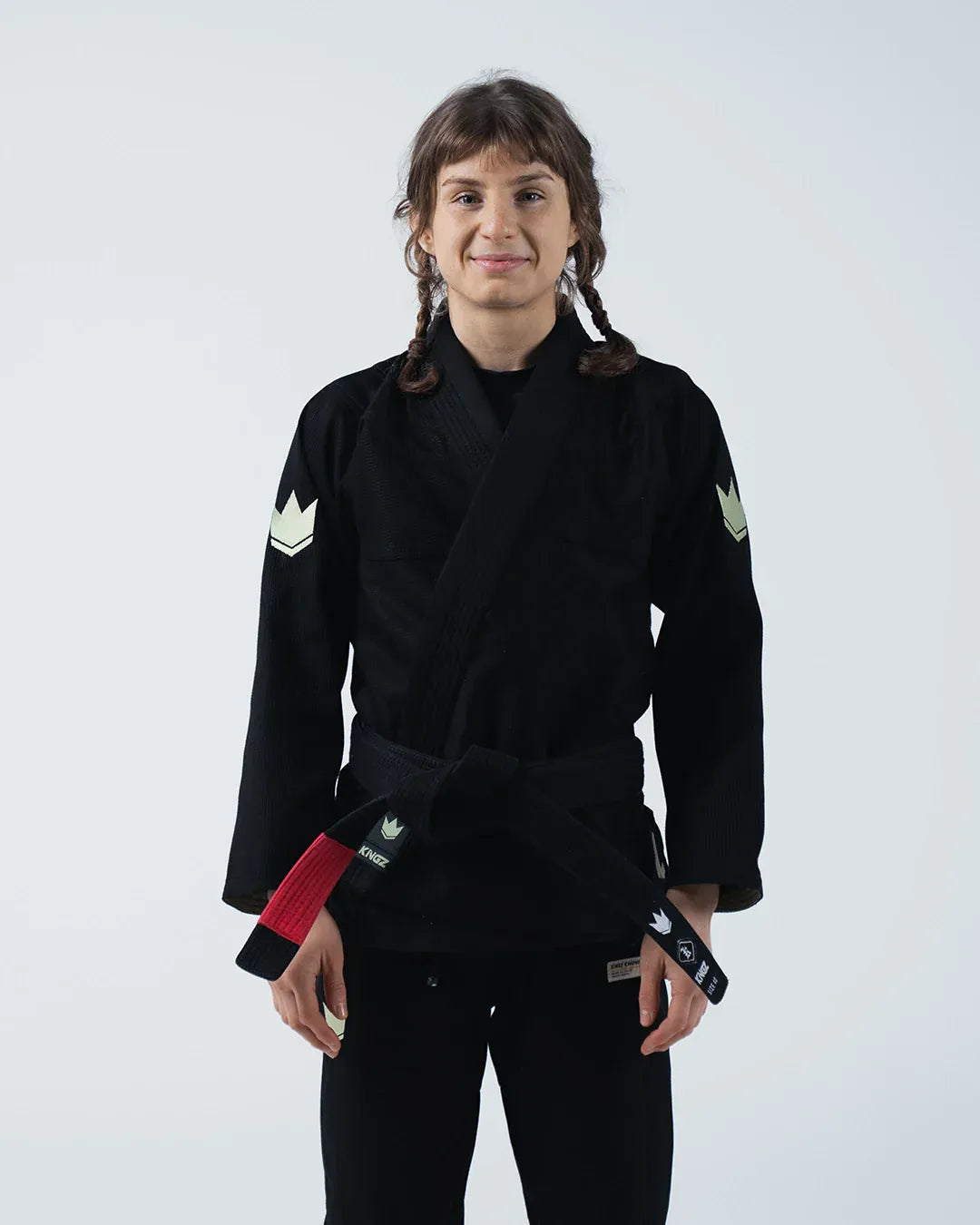
The ONE V2 Women's Jiu Jitsu Gi - Black
400 GSM High Tech Pearl Weave Jacket
Shop NowStructuring Your Home Training: From Drills to Workouts
Knowing the drills is one thing, but knowing how to put them together is where learning jiu jitsu at home really becomes effective.
Principles for Effective Home Training
Before starting a schedule, remember these:
-
Focus on quality, not quantity: Do each movement slowly and correctly before trying speed or intensity.
-
Consistency matters more than session length: Even 20 minutes a day beats occasional long workouts.
-
Increase difficulty gradually: Master basic drills first, then add more complex movements as you gain control.
Sample Workout Structures
|
Workout |
Duration |
Focus Areas |
Structure |
|
Daily Primer |
20 min |
Core movement retention |
5 min warm-up, 10 min ground mobility (shrimping, bridging, technical stand-ups), 5 min shadow grappling |
|
Focused Session |
25 – 35 min |
Skill refinement + conditioning |
10 min warm-up, 15 – 20 min drill blocks (e.g., guard recovery, rolling variations, sprawls), 5 – 10 min conditioning/core work |
|
4-Week Progressive Plan |
4 weeks |
Gradual skill layering |
Week 1: Fundamentals only; Week 2: Introduce transitions; Week 3: Add flow and shadow grappling; Week 4: Combine drills into sequences |
You can adjust by factoring in space, energy, and available equipment.
Incorporating Equipment
While there are many drills with no need for equipment, small tools can expand what’s possible in a home setup:
|
Equipment |
Use |
Benefit |
|
Grappling dummy |
Grip drills, positional practice |
Adds resistance and realism without a partner |
|
Resistance bands |
Bridging, collar drag, judo throws |
Builds strength and control in foundational movements |
|
Timer / Metronome |
Interval training |
Helps maintain pace, structure, and intensity |
You don’t need fancy gear. Just keep practicing, pay attention to your movements, and build up slowly. You’ll see progress before you know it.
Putting It All Together
A well-planned home session can follow this simple flow:
-
Warm-Up (5 - 10 min): Move your joints, stretch lightly, and get your body ready.
-
Core Drills (15 - 30 min): Focus on 2 - 3 key movements, practicing them carefully.
-
Integration / Flow (5 - 10 min): Combine drills into sequences or do shadow grappling.
-
Cool-Down & Reflection (5 min): Stretch gently and jot down notes about your technique, energy, and what to work on next.
Over time, structured home practice turns simple repetition into steady progress and real skill development.
The Mental Game and Tracking Progress
Solo training isn’t just about moving your body, engaging your mind is also critical. When you learn jiu jitsu at home, the absence of a partner means you need to be intentional about mental practice and self-assessment. Here is how:
Visualization and Study
-
Watch instructionals or competition footage, then mentally rehearse the techniques.
-
Imagine a resisting partner: feel the weight shifts, grips, and escapes in your mind.
Shadow grappling while picturing a partner helps you improve timing, coordination, and decision-making.
Keeping a BJJ Training Journal
Tracking your jiu jitsu training at home helps you make real progress. Your journal can be simple, just a few lines each session to note patterns, weaknesses, and improvements.
|
Journal Element |
Purpose |
Tips |
|
Drills Performed |
Keep track of what you practiced |
Write down reps, sets, and any variations |
|
Technical Notes |
Record key tips or corrections |
Example: “Keep hips tighter during shrimp” |
|
Physical Feedback |
Note soreness, fatigue, or flexibility |
Helps prevent overtraining or injury |
|
Patterns & Weak Points |
Spot movements that feel stiff or tricky |
Focus on these in your next session |
Over time, this record becomes a personal blueprint of strengths and areas to target, making your home sessions more effective.
Setting SMART Goals for Home Training
Goals keep practice measurable, motivating, and structured. Use the SMART framework (Specific, Measurable, Achievable, Relevant, Time-bound) to guide solo work.
|
Example Goal |
Why it Works |
|
“Perform 50 perfect hip escapes on each side this week” |
Targets precision, consistency, and volume |
|
“Complete 10 technical stand-ups in under 30 seconds” |
Adds timing challenge and progression |
Bringing Mind and Body Together
BJJ drills at home are a chance to strengthen both body and mind. With focused practice, each solo session builds technique, confidence, and resilience, so returning to live training feels smoother and more natural.
Bottom Line
Learning jiu-jitsu at home isn’t about shortcuts or flashy moves. It’s about showing up, staying safe, and practicing with intention.
By focusing on basic BJJ solo drills, structuring your sessions, and using visualization or a simple journal, every home workout can actually mean something. Even without a partner, you can improve your movements, build confidence, and understand the art better.
When you step back onto the mats, you’ll notice it, smoother transitions, better posture, sharper awareness. Training at home doesn’t replace real jiu jitsu practice with partners, but it can fill the gaps on busy days when getting to the gym isn’t possible. Adding two or three weekly strength and conditioning sessions can also help build a stronger body and reduce the risk of injuries, making your time on the mats more productive.
FAQs
Can I really learn jiu jitsu at home without a partner?
Yes. While nothing replaces live sparring, you can develop strong foundations through BJJ solo drills, mobility work, and shadow grappling. Home training builds muscle memory, strength, and coordination that transfer directly to partner sessions.
How often should I train at home?
Consistency beats length. Even 20 to 30 minutes of focused, structured practice each day can be more effective than occasional long sessions. Gradually increase intensity and complexity as you get more comfortable.
What equipment do I need for home training?
At minimum: a clear space and a mat. Optional tools like a grappling dummy or resistance bands can enhance strength and realism, but drills like shrimping, bridging, and technical stand-ups can be practiced safely with no gear.
How do I avoid injury during solo training?
Put safety first. Warm up well, move with control instead of speed, and know your limits. Skip risky submissions or throws without guidance, and train on a dedicated, padded space to reduce the chance of injury.
Can home training improve my performance on the mats?
Exactly. When done with focus, home training builds body awareness, core strength, mobility, and mental sharpness. Coming back to live rolls, you’ll notice smoother movements, better posture, and more confidence.
How should I track my progress at home?
Keep a BJJ training journal. Write down your drills, reps, how your body feels, and any technical notes. Set clear, achievable goals to spot weaknesses and track progress. This way, every home session counts.
Is jiu jitsu hard to learn?
Yes, at the beginning it can feel tricky. The movements are new, and problem-solving takes time, but regular practice, especially focused solo drills at home, helps you improve steadily.